The Egyptian stage will be dedicated to the 115th anniversary of the birth of the Egyptian humanist writer Naguib Mahfouz and the tenth anniversary of the “Great Teachers of BRICS” project. Mahfouz’s works explore time, society, faith, knowledge, love and human dignity. The project devoted to the teachers of BRICS is founded on precisely this principle: identifying figures within national cultures who can bring peoples together while respecting differences in their traditions.
BRICS. World of Traditions has been implementing the project since 2022 under the motto “From the Ecology of the Soul and Body to the Ecology of the World”. Its stages have taken place in India (2022), Russia (2024) and Brazil (2025). In September 2026, on the sidelines of the 18th BRICS Summit in New Delhi, the presidents of Russia and Egypt reaffirmed their intention to continue strengthening bilateral ties. The Egyptian side specifically identified joint projects in energy, industry, trade, investment, food security and tourism among the main areas of cooperation.
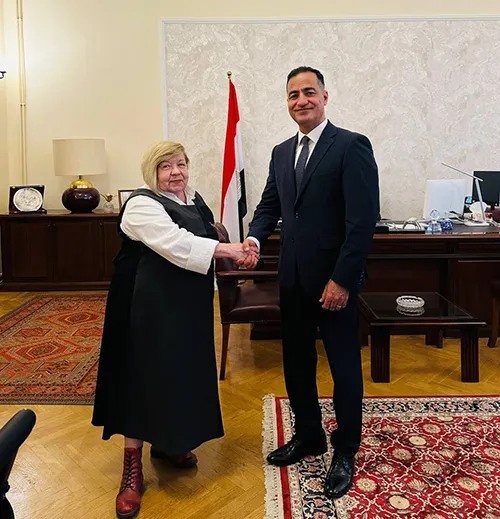
Lyudmila Sekacheva, President of the Regional Public Organization “BRICS. World of Traditions”, and Hamdy Shaaban Abdelhalim Mohamed, Ambassador Extraordinary and Plenipotentiary of the Arab Republic of Egypt to Russia. Photo: BRICS. World of Traditions.
In this context, humanitarian initiatives create a social environment in which official agreements become more understandable to the peoples of the BRICS countries. This is the setting in which preparations are under way for the fourth, Egyptian stage of the international social, cultural and business program “The Peoples of BRICS Choose Life”. Russian Deputy Foreign Minister and Russia’s BRICS Sherpa Sergey Ryabkov expressed confidence that “the Egyptian stage of the program will be held to its customary high standard and will make a significant contribution to expanding strategic partnership within the group”. Egypt’s accession to BRICS has substantially broadened the group’s African and Arab dimensions.
Alongside politics and security, economics and finance, there is a further area of cooperation involving people and civil society institutions. This level is of particular interest to Egypt: the country belongs simultaneously to the Arab, African and Mediterranean cultural spheres, and its historical heritage has long been part of global humanitarian exchange.
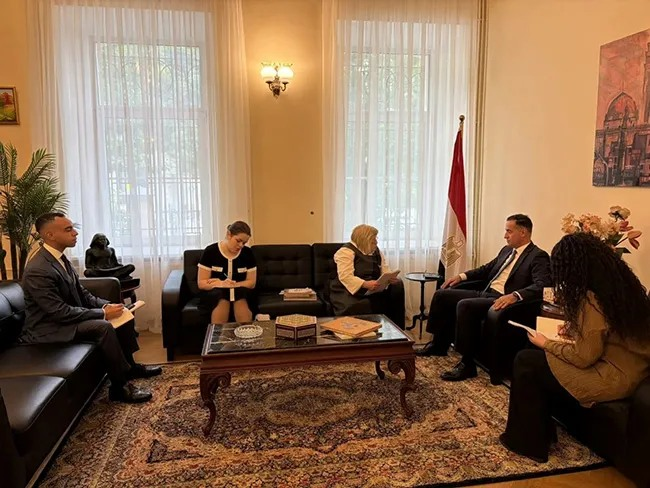
The first concrete step in support of the forthcoming program was a meeting held at the Egyptian Embassy in Moscow on 15 June 2026 between Mr Hamdy Shaaban, Ambassador of the Arab Republic of Egypt to Russia, and Lyudmila Sekacheva, head of “The Peoples of BRICS Choose Life” program. The meeting focused on developing cultural and humanitarian cooperation among Egypt, Russia and the BRICS countries. The main item on the agenda was a discussion of the forthcoming stage of the program in 2027.
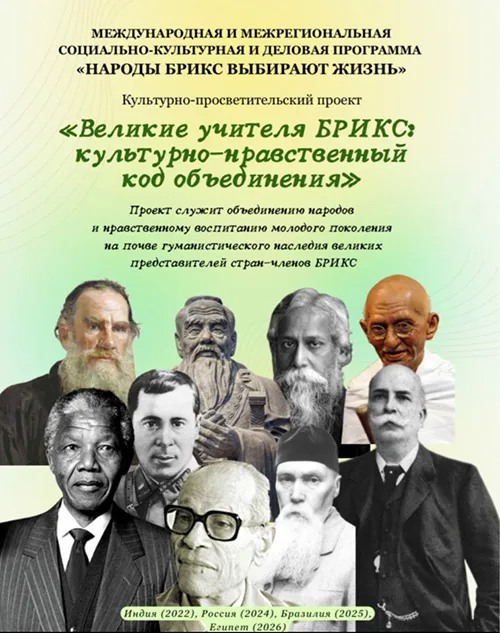
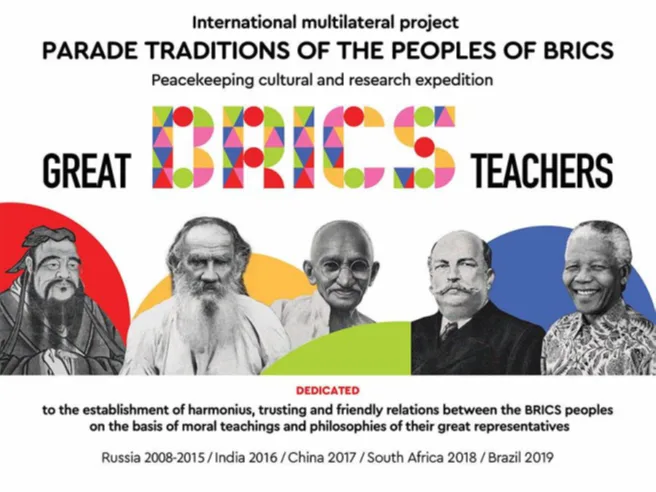
An illustration for the “Great Teachers of BRICS” cultural and educational project. Photo: BRICS. World of Traditions.
During the meeting, the ambassador emphasized the important role of civil society institutions and cultural organizations in strengthening ties between peoples. He praised the work and initiatives of BRICS. World of Traditions aimed at preserving cultural heritage and promoting the countries’ civilizational diversity. In his words, “such cooperation helps further strengthen humanitarian and cultural ties alongside the dynamic development of political and economic relations”. For her part, Lyudmila Sekacheva assured the head of the Egyptian diplomatic mission that “the program will be implemented with due regard for the country’s national and religious characteristics and with deep respect for its people and traditions”.
The project’s main aims and objectives are to unite the peoples of the BRICS countries through the joint implementation of multilateral projects; support people’s spiritual and moral well-being; improve human health; encourage the younger generation to develop themselves on the basis of moral values; advance youth diplomacy by establishing and expanding cultural and educational cooperation among schools, colleges and universities in Russia and Egypt, including the study of Russian; and promote the development of multilateral trade and economic relations among the BRICS countries.
The work plan for November 2027 is built around several interconnected areas. The program is expected to open in Cairo with an expanded round-table discussion entitled “A Nation’s Morality Is Its Most Powerful Unifying Force”. The agenda includes a presentation of the Egyptian stage, a discussion of cultural and educational initiatives, and dialogue among representatives of different religious communities in Russia and Egypt, a country where religious traditions have a prominent place in public and cultural life.
The next major component is the BRICS Youth Festival. Universities in Cairo and Alexandria are being considered as possible venues. The program includes presentations of material from previous stages, an exhibition about Naguib Mahfouz, an art exhibition featuring portraits of the “Great Teachers of BRICS”, a documentary screening, a discussion, a student cultural program and a performance of the BRICS Anthem in Arabic.
The possibility of signing a cooperation agreement between Cairo University and Kazan Innovative University named after V. G. Timiryasov is being considered, with a view to academic collaboration. The project also envisages opening “Great Teachers of BRICS” cultural and educational centers in Egyptian schools and universities, where Russian will be taught.
The festival concept envisages creating a “BRICS Peoples’ Peace Alley” by planting 11 date palms, one for each BRICS country, on the grounds of a university in Alexandria. The program also includes the scientific and educational project “BRICS Youth for Information, Technology and Human Health Security”. It is expected to take the form of a round-table discussion and a team quiz on digital society and the opportunities and risks of new technologies. “For a humanitarian program, this is no incidental digression,” explained Lyudmila Sekacheva. “Issues of information overload, digital security and the impact of technology on thinking and health increasingly lie at the intersection of the technological and humanitarian agendas.”
According to her, another strand of the program in Egypt is devoted to preserving historical memory. The “Voice of Truth” project is conceived as a continuation of work on the multilingual Brazilian collection of reliable research articles entitled “The Great Patriotic War of the Soviet People”. The Egyptian program proposes to explore Egypt’s role in the events of the war in North Africa and to present an Arabic version of the Brazilian collection.
The social, cultural and charitable project “Let Us Fill People’s Hearts with Kindness and Love” includes an international interfaith concert, “Walking the Path of Kindness”, featuring spiritual and patriotic songs and poems; the “Kind Book” literary and educational initiative; an exhibition of children’s drawings by winners of the “About Kindness, with Kindness, for Kindness” competition; and a discussion meeting entitled “Egypt, Here Is My Hand”, intended to provide moral support to people with partial hearing and vision loss.
One particular feature of “The Peoples of BRICS Choose Life” program deserves attention: its cultural agenda is not separated from its business agenda by a “rigid boundary”. The plan for the Egyptian stage includes the multilateral “AURA” project: a business mission, B2B negotiations, tasting events, traveling exhibitions by manufacturers, promotion of Russian goods and IT solutions, and a display of products from partners in other BRICS countries. “When a humanitarian program helps people better understand their partner’s context, it reduces the distance in business communication,” Lyudmila Sekacheva emphasized.
Source: the article was originally published in Russian on the BRICS. World of Traditions website. Direct link: https://interaffairs.ru/news/show/57461
Translated and adapted from Russian into Portuguese by Alessandra Scangarelli Brites, Revista Intertelas.
Published by Revista Intertelas · 11 November 2026. Topics: BRICS. World of Traditions, Egypt, Lyudmila Sekacheva.
Original article: https://revistaintertelas.com/2026/11/11/a-quarta-etapa-egipcia-da-diplomacia-publica-dos-brics/
BRICS. World of Traditions takes part in the “India: Three Perspectives” exhibition in Moscow
17 April 2026 · Revista Intertelas · Translated from Portuguese
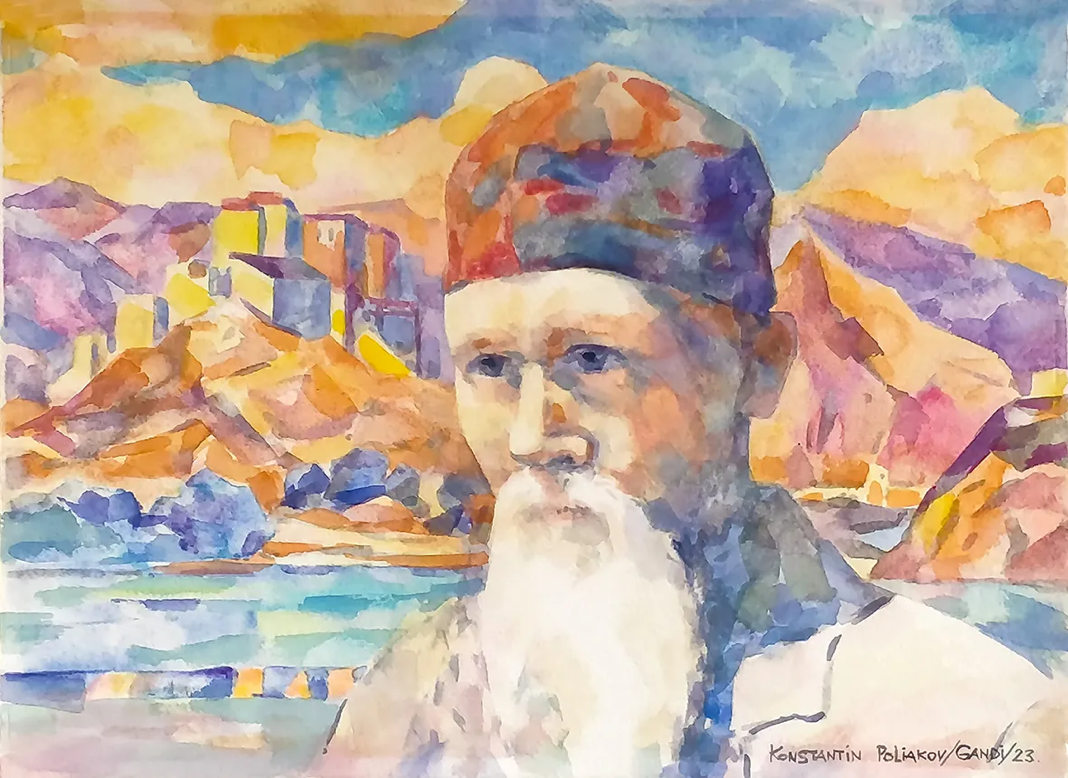
Photo: exhibition materials / Revista Intertelas.
A work by Konstantin Polyakov. Courtesy of the organizers.
On 6 April in Moscow, a delegation from BRICS. World of Traditions, led by its president, Lyudmila Sekacheva, attended the opening ceremony of the art exhibition “India: Three Perspectives” at the Ilya Glazunov Gallery. Organized by the Jawaharlal Nehru Cultural Centre at the Indian Embassy in Moscow, the event brought together artists, diplomats and representatives of public organizations, demonstrating strong interest in mutual cultural understanding between Russia and India.
The exhibition featured India-inspired paintings by three artists: Konstantin Polyakov, Shanti Kushwaha and Larisa Prasolova. Vinay Kumar, Ambassador Extraordinary and Plenipotentiary of the Republic of India to the Russian Federation, who attended the opening as the guest of honor, emphasized the project’s particular importance in strengthening creative ties between the two countries. During the cultural event, Lyudmila Sekacheva held a series of discussions aimed at implementing joint projects to mark the year of India’s BRICS chairmanship.
Works by Konstantin Polyakov featured on the magazine’s page.
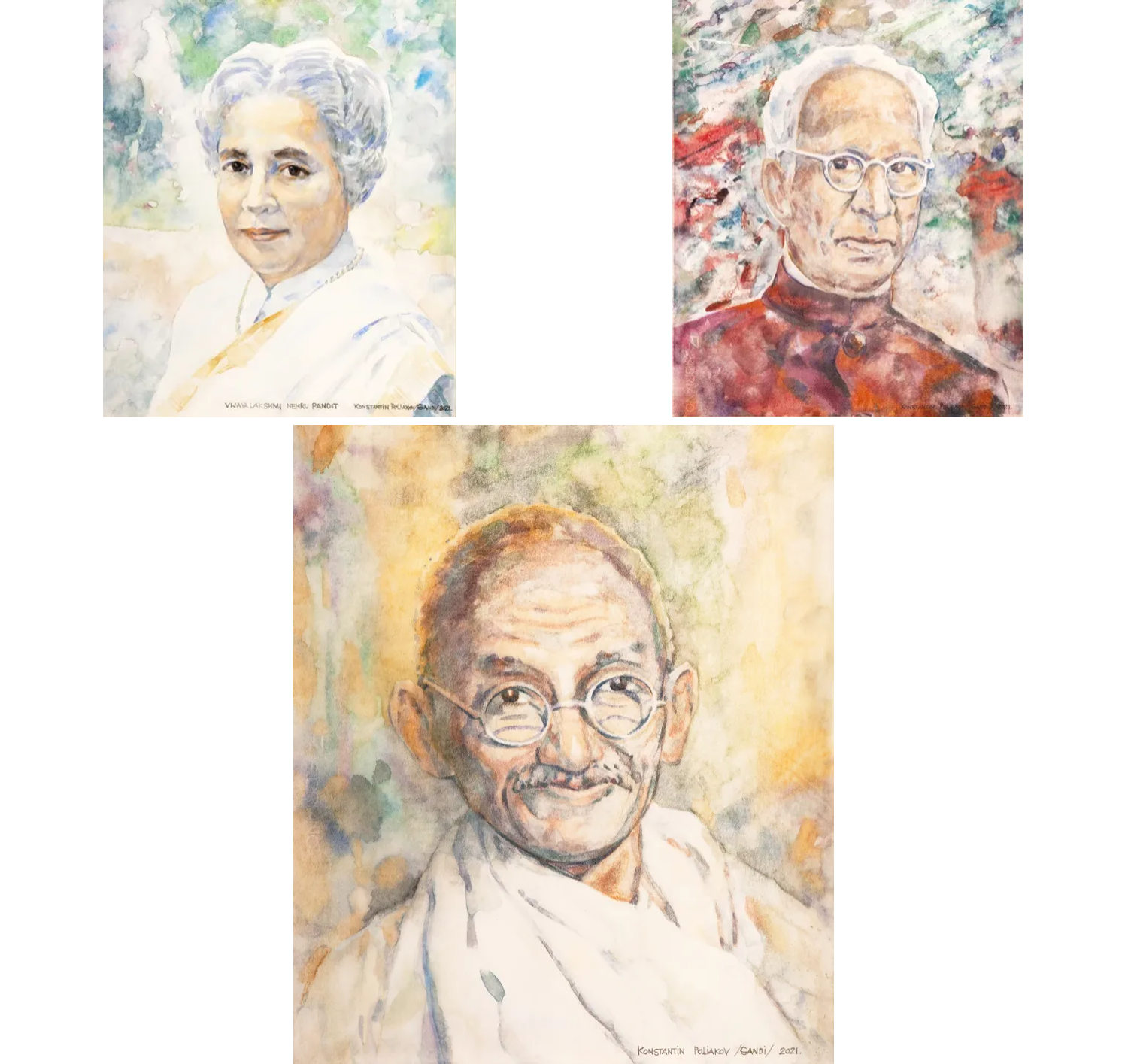
An important meeting took place between Ambassador Kumar and Madhur Kankana Roy, Director of the Jawaharlal Nehru Cultural Centre in Moscow. They discussed continued support for BRICS initiatives from the Embassy and the Cultural Center. BRICS. World of Traditions plans include creating a memorial to Mahatma Gandhi and Leo Tolstoy in St Petersburg as a symbol of the two countries’ deep spiritual and cultural ties; erecting a monument in the Indian state of Maharashtra to Afanasy Nikitin, the merchant from Tver who introduced Russia to India 550 years ago; and creating the “Great Teachers of BRICS” digital library, an online platform bringing together the legacy of thinkers, philosophers and humanists from all the group’s member countries.
The Indian side showed considerable interest in the “Discover India” charity event, scheduled for 22 April 2026 for beneficiaries of the So-edinenie Foundation, which supports people with vision and hearing
impairments. The event was to take place as part of the “Here Is My Hand” project within the international social and cultural program “The Peoples of BRICS Choose Life”, with the support of the Jawaharlal Nehru Cultural Centre. In a touching gesture, artist Larisa Prasolova offered to donate one of her India-themed paintings to the So-edinenie Foundation.
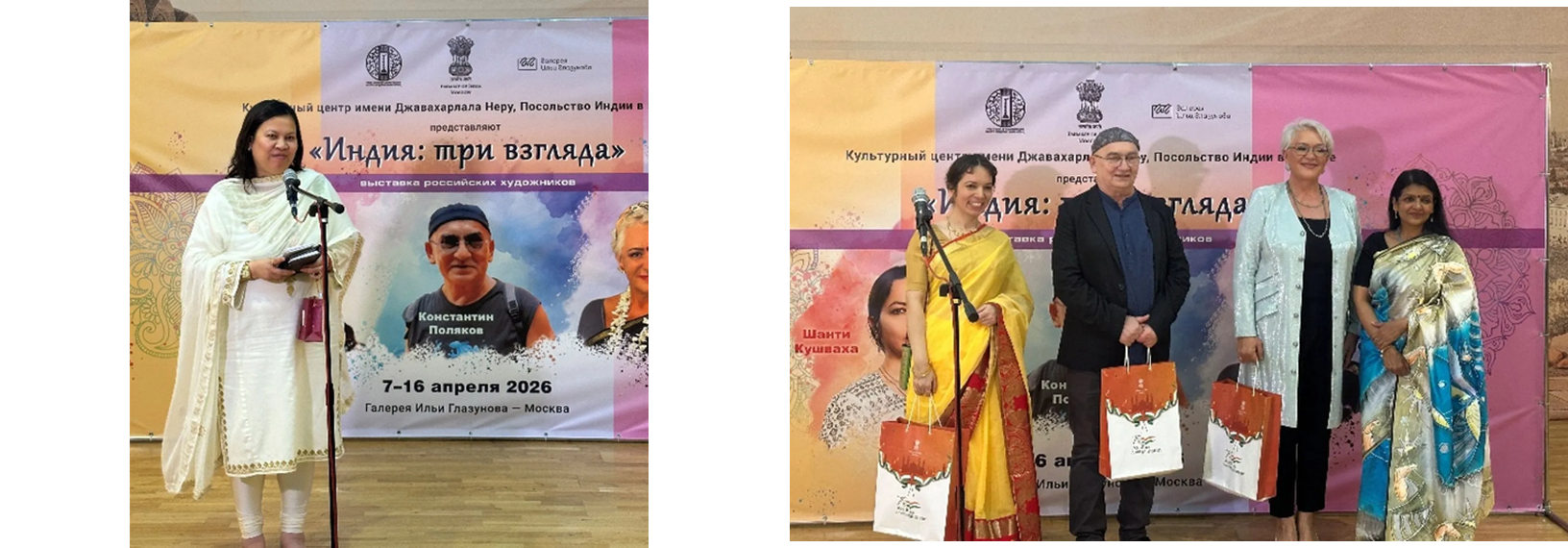
Photo: exhibition materials / Revista Intertelas.
Lyudmila Sekacheva also discussed with Pawan Kumar, head of the Embassy’s press service, the forthcoming publication of an article in the Indian Embassy’s newsletter, Indian Herald, devoted to the social, cultural and educational initiatives of “The Peoples of BRICS Choose Life” program during India’s BRICS chairmanship.
The participation of the BRICS. World of Traditions delegation in the “India: Three Perspectives” exhibition and its discussions with senior Indian diplomatic representatives reaffirmed a mutual commitment to developing a multifaceted, long-term humanitarian dialogue. The areas of cooperation discussed, together with the planned cultural and information projects, provide a solid foundation for strengthening ties between Russian and Indian societies. BRICS. World of Traditions will continue its work to bring peoples closer together, drawing on the principles of mutual respect and shared spiritual and moral values.
Source: the text was originally published in Russian on the BRICS. World of Traditions website.
Translated and adapted by Alessandra Scangarelli Brites, Revista Intertelas.
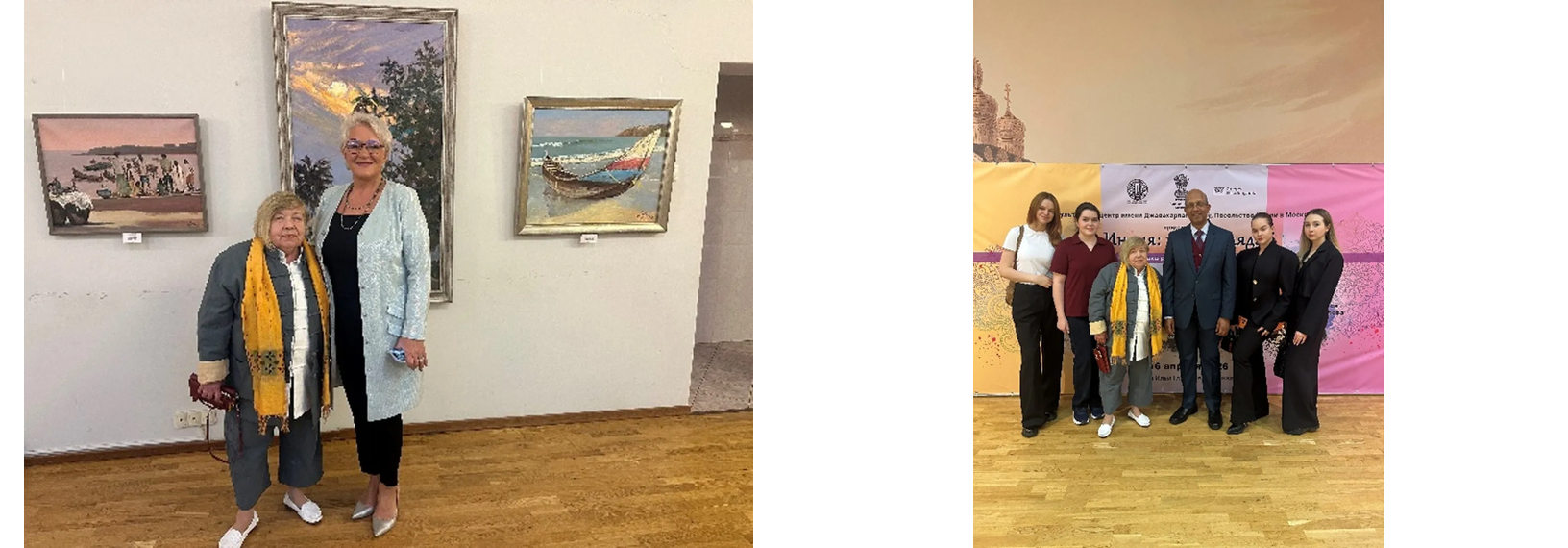
Photo: exhibition materials / Revista Intertelas.
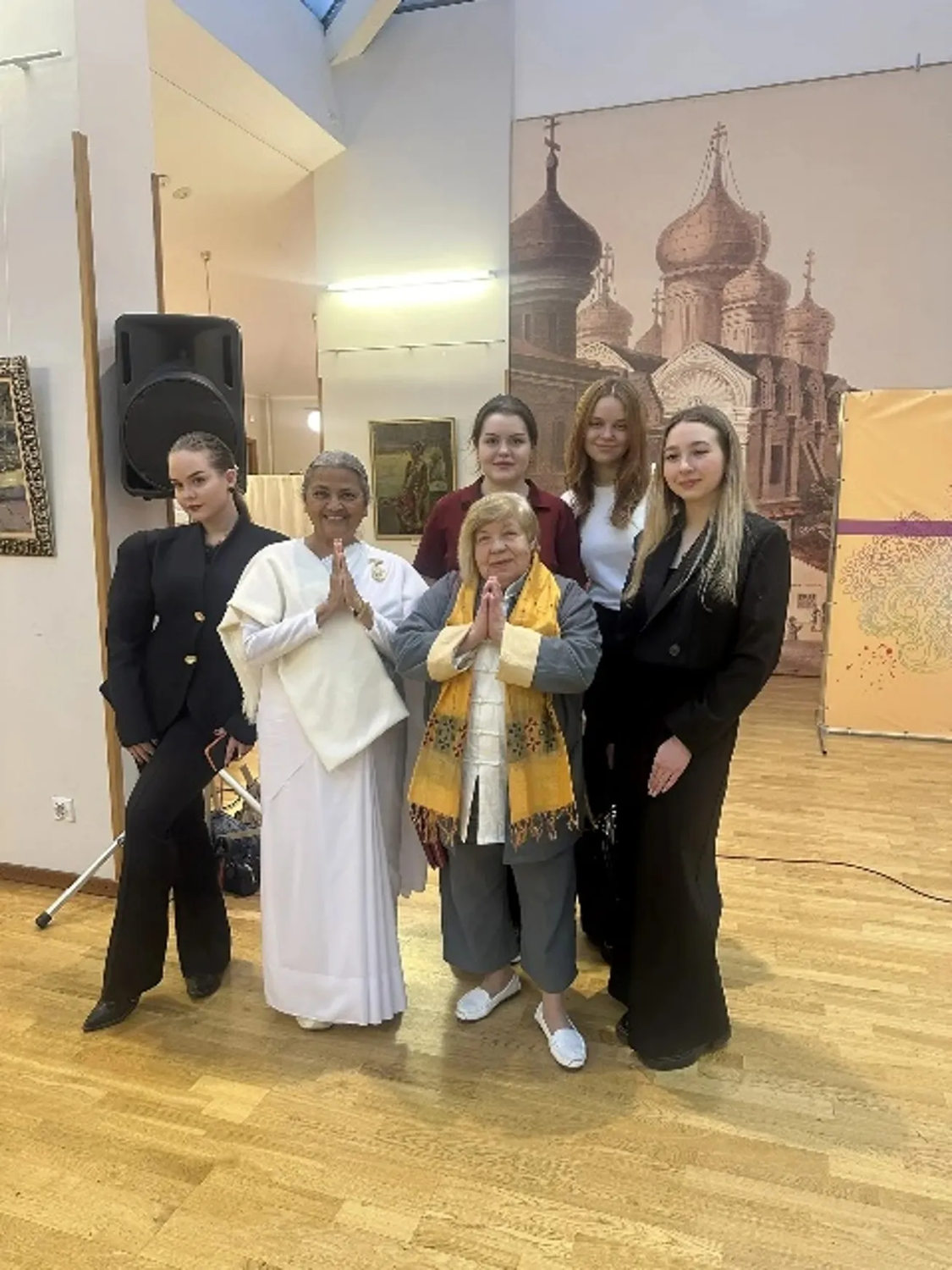
Photo: exhibition materials / Revista Intertelas.
Published by Revista Intertelas · 17 April 2026.
The Peoples of BRICS Choose Life program promotes strategic exchange among the group’s member countries
20 October 2025 · Revista Intertelas · Translated from Portuguese
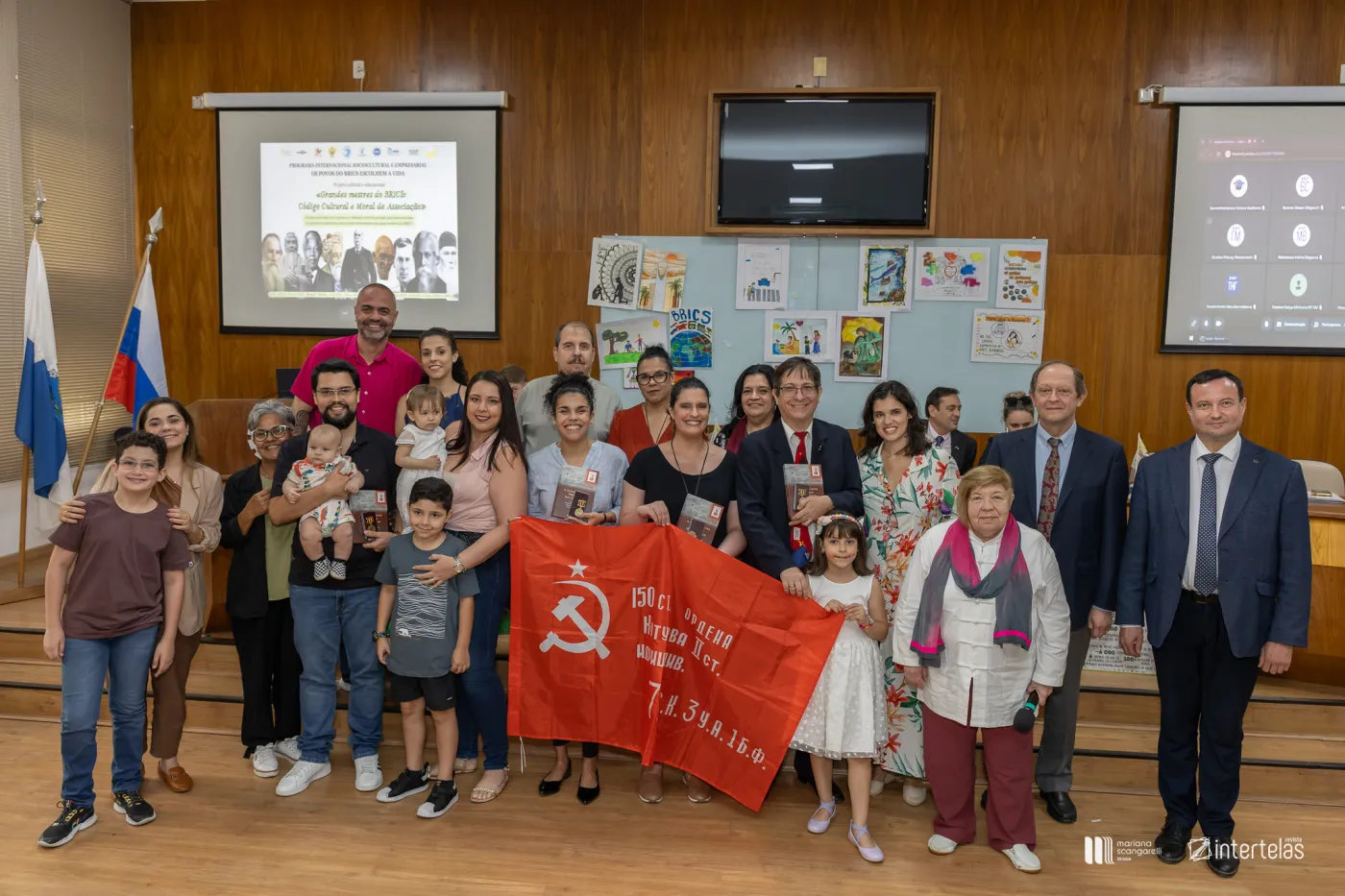
Photo: Mariana Scangarelli / Revista Intertelas.
Promoting and strengthening strategic cooperation among the BRICS countries is the main goal of the international and interregional social, cultural and business program “The Peoples of BRICS Choose Life”, whose third, Brazilian stage took place in Rio de Janeiro and São Paulo in October this year. The program was developed by the Russian regional public organization “BRICS. World of Traditions”, which has been an information partner of Revista Intertelas for five years. The program’s motto is “From the Ecology of the Soul and Body to the Ecology of the World”.
The first stage took place in India in 2022, and the second in Russia in 2024, across five regions of the country. Students from eight countries took part in the Russian stage, including Brazilian students from the University of Brasília. On 15 October 2025, the Intertelas editorial team attended the first part of the program in lecture room E212 of the Technology Center (Building E), School of Chemistry, Federal University of Rio de Janeiro (UFRJ), to cover the event.
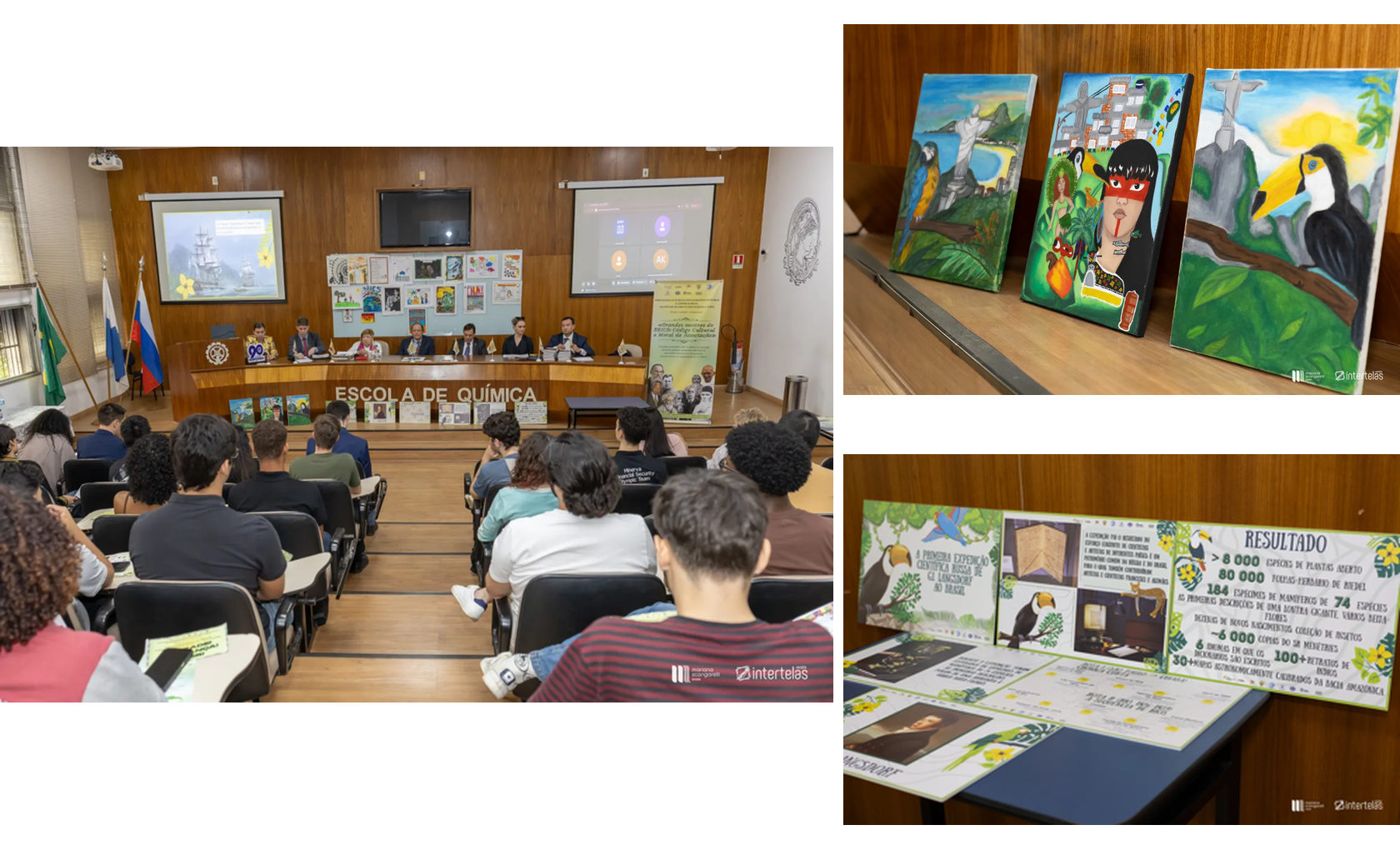
Photo: Mariana Scangarelli / Revista Intertelas.
The first part of the program was organized by “BRICS. World of Traditions”, UFRJ’s General Directorate of International Relations, the Institute for Social and Creative Development, Russia, and LOTUS-AURA LLC, Russia, with support from the Presidential Grants Foundation and assistance from the Russian Consulates General in Rio de Janeiro and São Paulo, as well as Rossotrudnichestvo. Participants included students, Brazilian researchers, representatives of universities and organizations from Brazil and Russia, and diplomatic representatives.
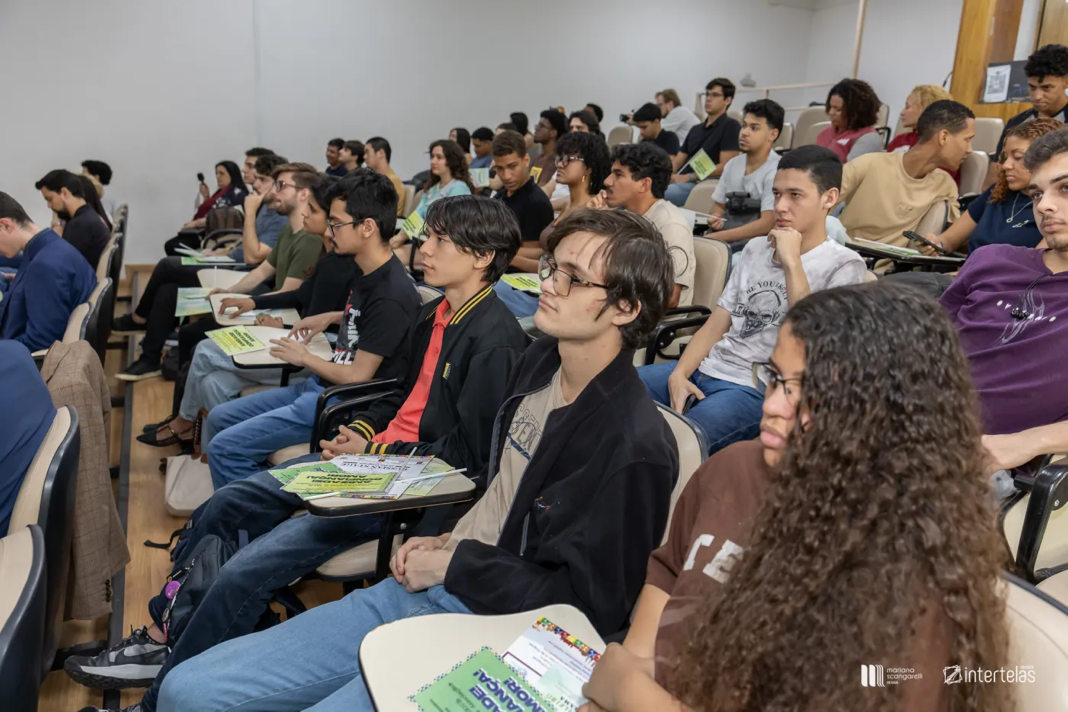
Photo: Mariana Scangarelli / Revista Intertelas.
The Brazilian stage of “The Peoples of BRICS Choose Life” program was dedicated to the centenary of Russian public diplomacy, the 180th anniversary of the birth of the Baron of Rio Branco, the bicentenary of the first Russian scientific expedition to Brazil, the 80th anniversary of Victory in the Second World War and the Great Patriotic War of 1941–1945, and the tenth anniversary of the multilateral cultural and educational project “Great Teachers of BRICS”. The initiative’s main objectives include bringing the peoples of the association closer together through joint multilateral projects in culture, education, public health, charity and business cooperation; providing moral education for the younger generation based on the ethical legacy of the BRICS teachers; supporting creative young people in culture and the arts by establishing and developing friendly, mutually beneficial educational ties between schools, colleges and universities in Russia, Brazil and other member countries; and promoting multilateral trade and economic relations among the BRICS countries.
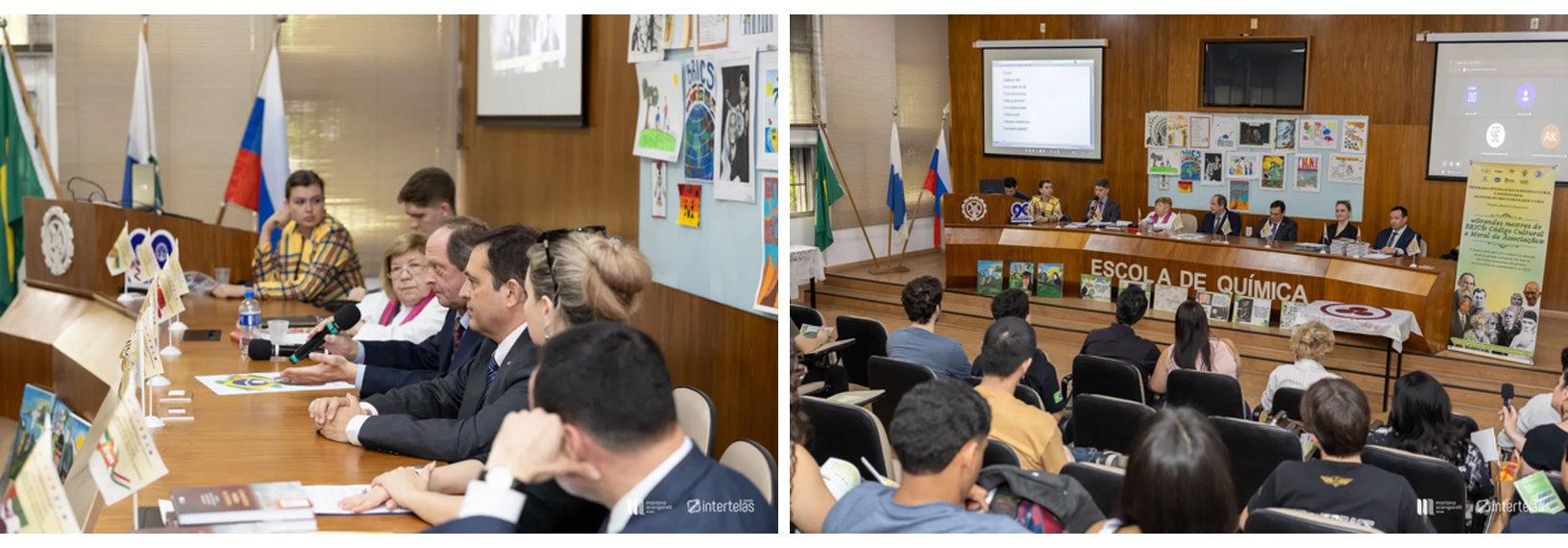
Photo: Mariana Scangarelli / Revista Intertelas.
The projects included in the program’s Brazilian stage were:
- “Great Teachers of BRICS”, a project promoting the historical and philosophical legacy of key historical figures from these countries.
- Establishing “Great Teachers of BRICS” centers in educational institutions in the member countries. During the previous stages in India and Russia, eight “Leo Tolstoy and Mahatma Gandhi” cultural and educational centers were opened and later renamed “Great Teachers of BRICS” centers.
- The social and charitable project “Open Your Heart to Kindness”, which includes an international competition for children’s creative works in each country.
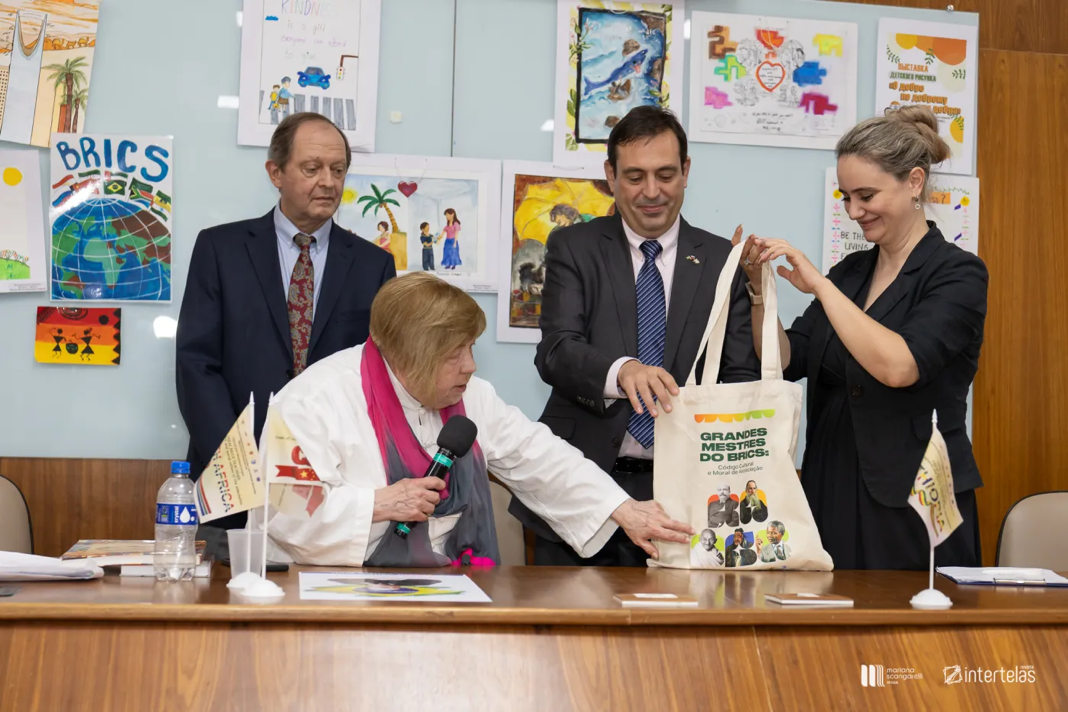
Photo: Mariana Scangarelli / Revista Intertelas.
- “Brazil: Preserving the Historical Memory of the Great Patriotic War”, a presentation of a trilingual collection in Portuguese, Russian and English written by Brazilian authors living in Rio de Janeiro. The authors received commemorative medals, and copies of the publication were donated to the UFRJ library. The Russian and English versions were translated by students of the Moscow State Institute of International Relations (MGIMO University of the Russian Ministry of Foreign Affairs), and edited and printed by staff of the V. G. Timiryasov Kazan Innovative University (KIU).
- “The Langsdorff Expedition: Before Your Eyes”, an exhibition of archival materials marking the bicentenary of the first Russian scientific expedition to Brazil.
- “BRICS Youth for a Secure Information Space”, a project encouraging young researchers and students to develop a scientific and practical approach to understanding and protecting against threats in the global information space.
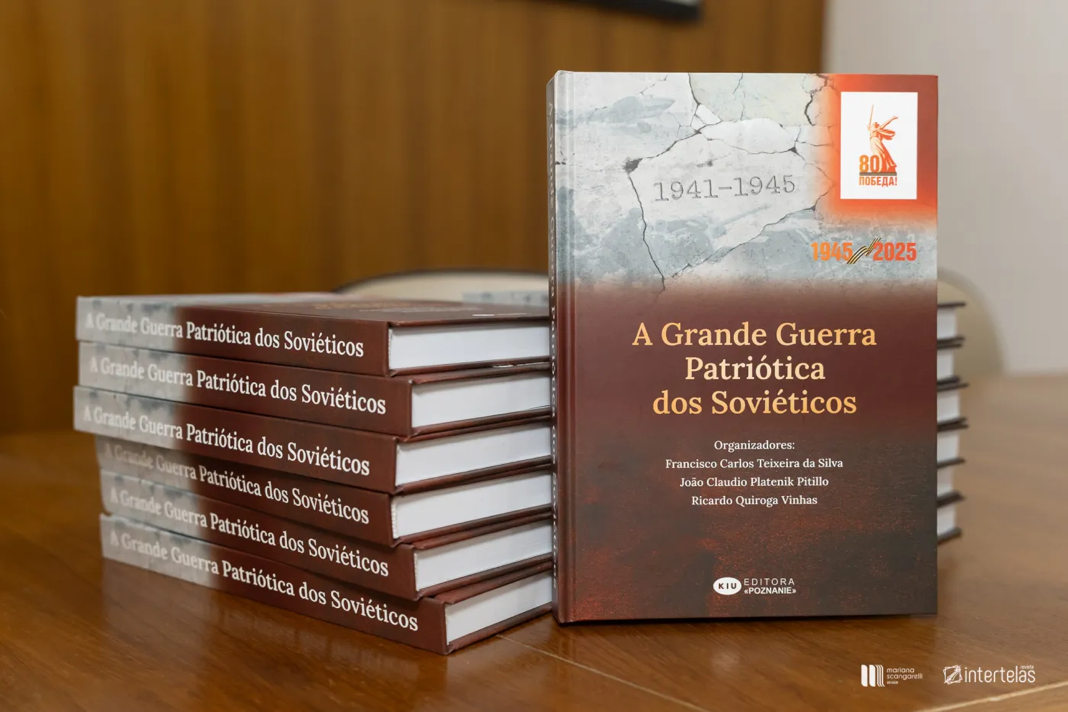
Photo: Mariana Scangarelli / Revista Intertelas.
- The multilateral social investment project “LOTUS-AURA”, part of the program’s business activities. In São Paulo, the company organized an exhibition of tea, coffee and chocolate samples from Russian, Indian and Brazilian brands, and signed a memorandum on a future business partnership with the Brazilian Coffee Industry Association (ABIC).
- The creative environmental initiative “BRICS Peace Wall and Alley”, an art project in which students planted ten ipê trees, Brazil’s national trees, representing the number of BRICS countries, and painted Nicholas Roerich’s Banner of Peace, adding their signatures, images and messages.
In her opening remarks, Lyudmila L. Sekacheva, President of “BRICS. World of Traditions”, emphasized the program’s particular focus on children and young people as she hosted the event, which she called “Youth Day at UFRJ”. “I have always believed that young people work and strive to change the world for the better. Five years ago, we were here in Rio, at UFRJ’s Praia Vermelha campus, where we planted the Great Teachers of BRICS tree.” At the time, Sekacheva told Sputnik Brasil in an interview: “This tree symbolizes the unity of peoples and serves as a shield against violence and adversity.”
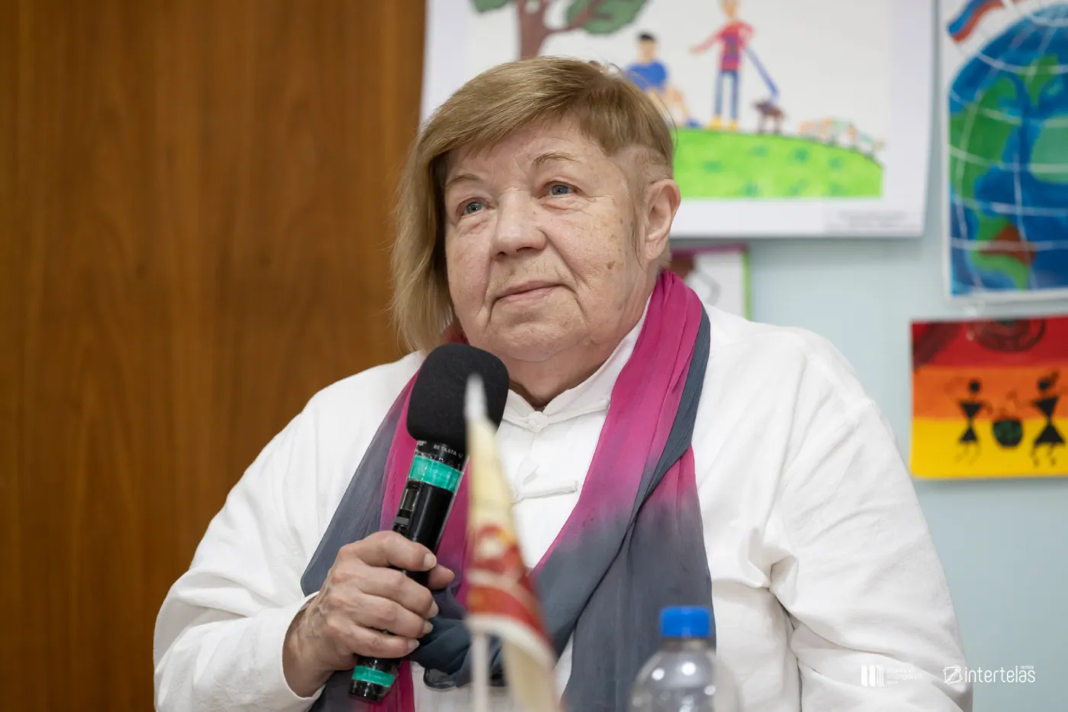
Lyudmila L. Sekacheva, President of “BRICS. World of Traditions”. Photo: Mariana Scangarelli / Revista Intertelas.
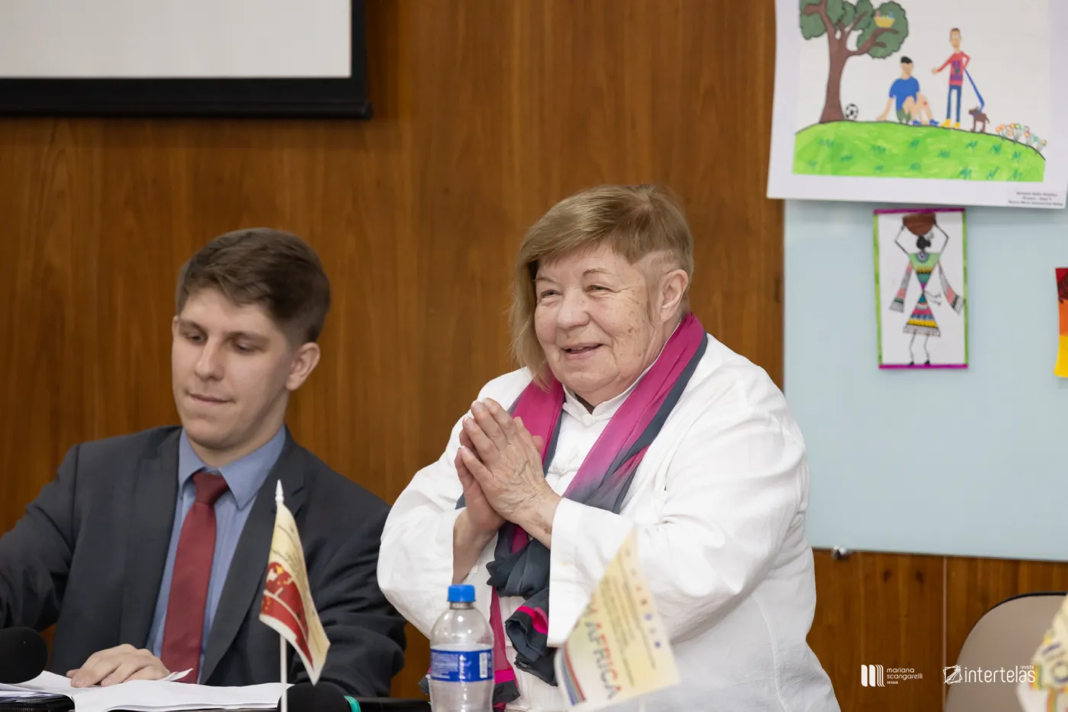
Photo: Mariana Scangarelli / Revista Intertelas.
The Baron of Rio Branco: A Legacy That Sets an Example for the Peoples of BRICS
The program’s flagship project is “Great Teachers of BRICS”, in which each country is represented by a historical figure, such as Mahatma Gandhi (India), Nelson Mandela (South Africa), Leo Tolstoy (Russia), Confucius (China) and the Baron of Rio Branco (Brazil). “This historical figure represents Brazil and is included among the Great Teachers of BRICS because of his commitment to resolving conflicts peacefully, without ever resorting to violence against other countries,” Sekacheva said.
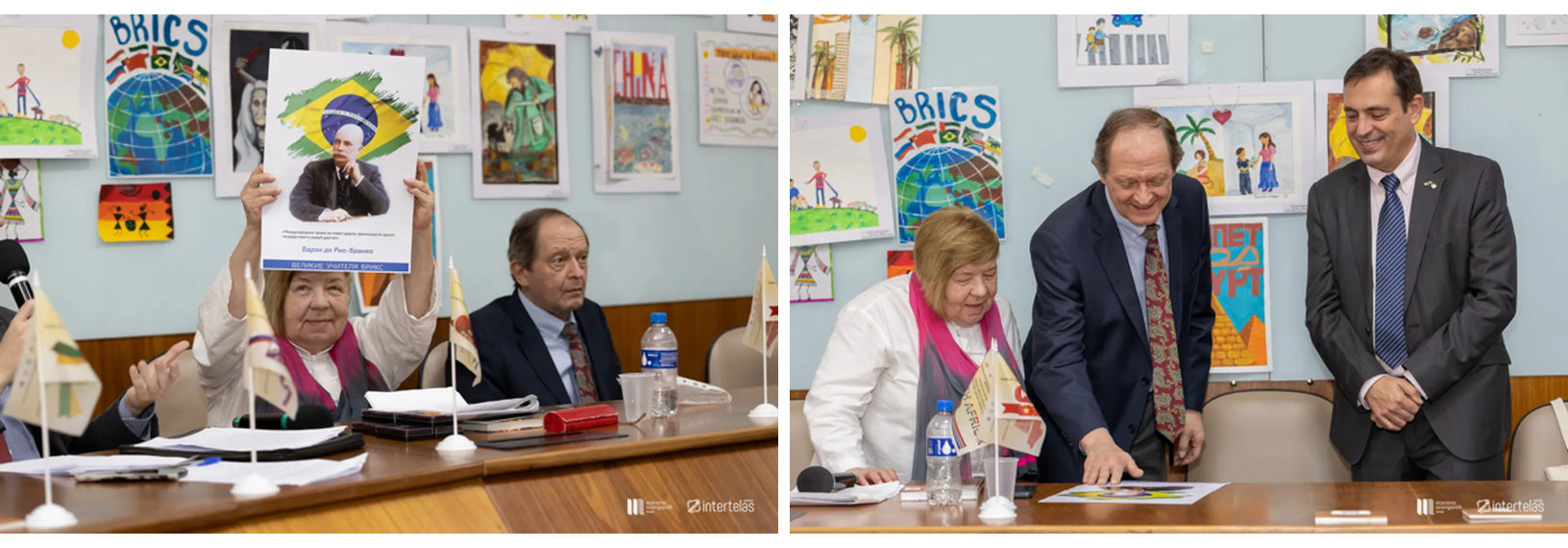
Photo: Mariana Scangarelli / Revista Intertelas.
The event featured an online literary and educational exhibition, “The Golden Chancellor”, dedicated to the patron of Brazilian diplomacy. It was presented by Darya Karaseva, the program’s coordinator for Brazil. As the presentation noted, “the Baron managed to settle territorial disputes with neighboring countries peacefully and lay the foundations for South American integration, strengthening Brazil’s position through the power of law, words and diplomatic skill rather than war.” In the same spirit, Brazil’s Ambassador to the Russian Federation, Sérgio Rodrigues dos Santos, said that such projects and initiatives were particularly relevant during celebrations of the 180th anniversary of the birth of the Baron of Rio Branco, “an iconic figure who championed the peaceful settlement of conflicts and diplomacy as a means of promoting peace”.
“Eight centers dedicated to the BRICS teachers were opened last year and in 2022; we plan to open new ones here in Rio and São Paulo. In São Paulo, we are working with the São Paulo School of Sociology and Politics Foundation (FESPSP), where a center will be inaugurated. Our goal is to give visitors an opportunity to become better acquainted with the philosophy of these great teachers,” Sekacheva stressed. She also noted the importance of public and state diplomacy working together to expand relations and deepen strategic cooperation among the BRICS countries: “We in public diplomacy work in various fields, while state diplomacy helps us organize events in different countries, demonstrating the strong synergy between the two.”
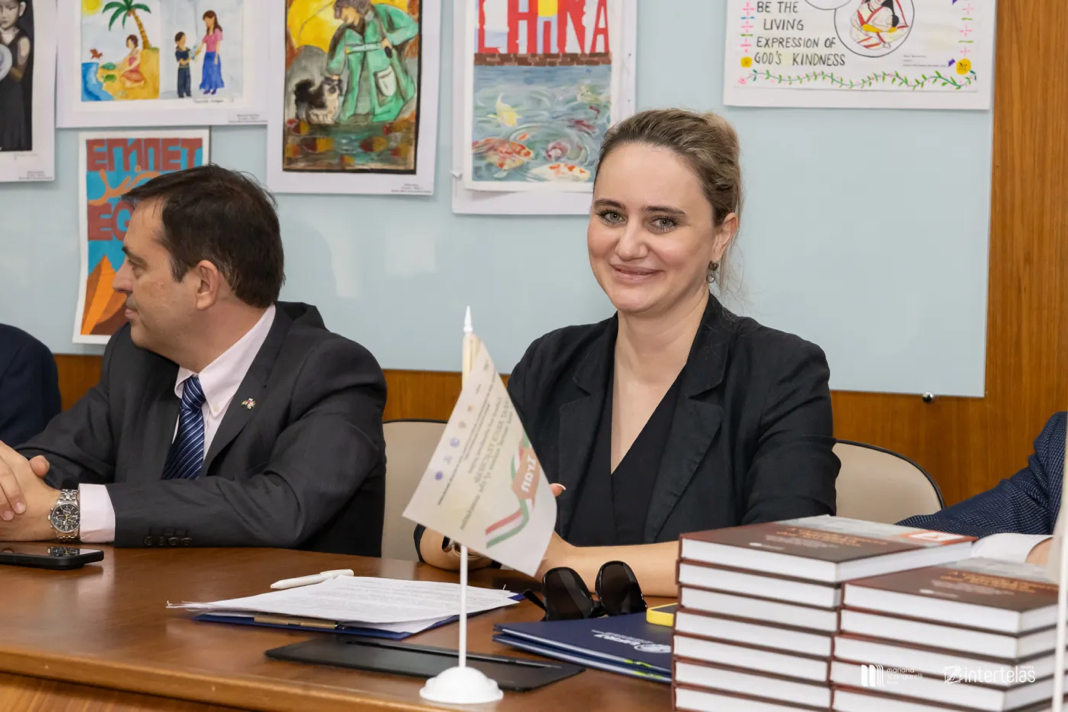
Darya E. Zinkovskaya, coordinator in Brazil of the project “Great Teachers of BRICS: The Association’s Cultural and Moral Code” and Director of ISKRA. Photo: Mariana Scangarelli / Revista Intertelas.
Russian–Brazilian Ties Through the Lens of the Langsdorff Expedition
Another important part of the program at UFRJ was the digital version of the cultural and educational presentation “The Langsdorff Expedition: Before Your Eyes”, dedicated to the first Russian scientific expedition to Brazil. Works on this subject were also displayed in the hall. The expedition, organized by Grigory Ivanovich Langsdorff, a physician and diplomat of the Russian Empire in Rio de Janeiro, helped Russians gain a better knowledge and understanding of Brazil’s natural riches.
The audience was told that the Langsdorff expedition took place from 1824 to 1829 and explored Brazil’s interior. Its participants documented the diversity of Brazil’s natural environment and society, producing a highly detailed account of the country at that time. The expedition was part of Emperor Alexander I’s diplomatic efforts to develop trade relations between Russia and Brazil, and received support from the young Emperor Pedro I and José Bonifácio.
In addition to these presentations, the hall displayed creative works by prizewinners of the International Children’s and Youth Competition “On Kindness”, held in 2022–2024 as part of the “Great Teachers of BRICS” project. Around 500 school and university students took part, from Moscow, Tver, Barnaul, Kazan, New Delhi, Faridabad and Hyderabad, as well as the Lieutenant Otávio Pinheiro Russian–Brazilian School. The competition aimed to support their personal development through art grounded in moral values.
“The Peoples of BRICS Choose Life” Program Embodies the Values of Nicholas Roerich’s Banner
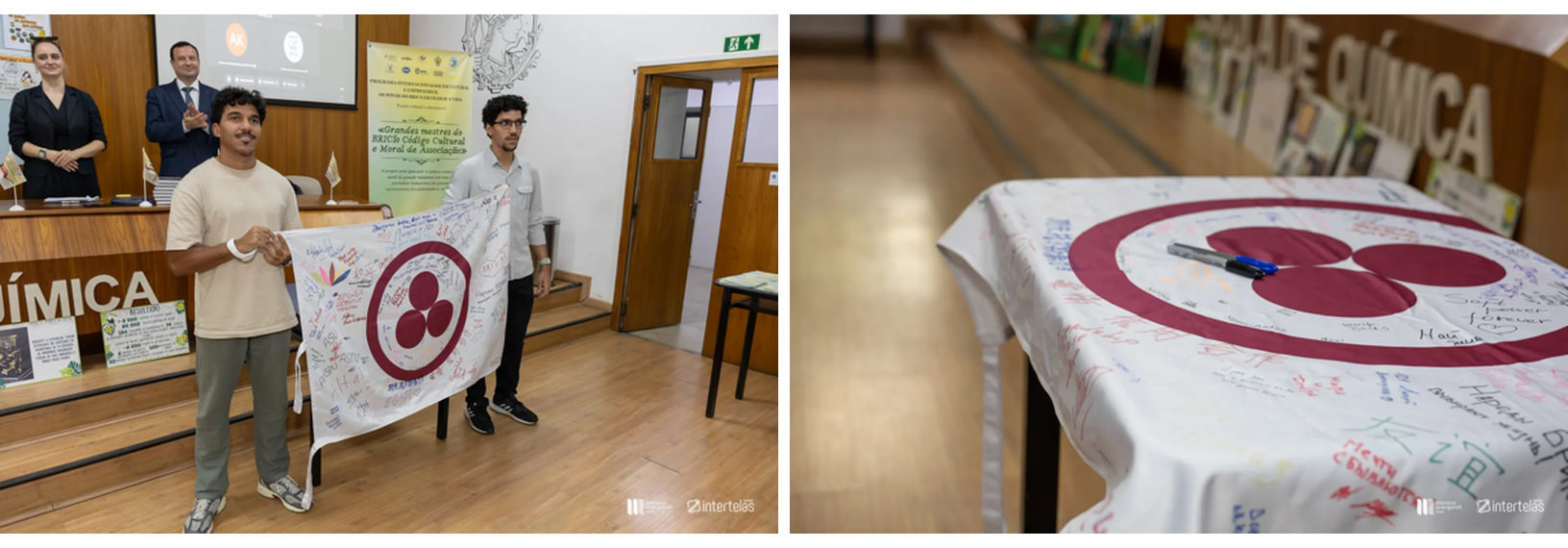
Photo: Mariana Scangarelli / Revista Intertelas.
During the event, university students brought Nicholas Roerich’s Banner into the lecture hall. At the end of the meeting, Sekacheva invited those present to sign it or leave a message about peace, kindness or related themes. The Banner, which already bears the signatures of ministers, ambassadors and consuls, will be passed on to other BRICS countries. Roerich was a Russian artist, writer, historian, poet and social thinker. His name has been added to the gallery of the Great Teachers of BRICS.
According to information on the website of the Roerich Institute of Peace and Culture in Brazil, the Banner of Peace is the symbol of the Roerich Pact. “This great humanitarian ideal establishes protection for humanity’s cultural achievements comparable to that afforded to human beings, in accordance with Articles I and II of the Peace Pact (see the Roerich Pact). Educational, artistic and scientific institutions, artistic and scientific missions, and their personnel, property and collections are considered neutral and must therefore be protected and respected by the belligerents.”
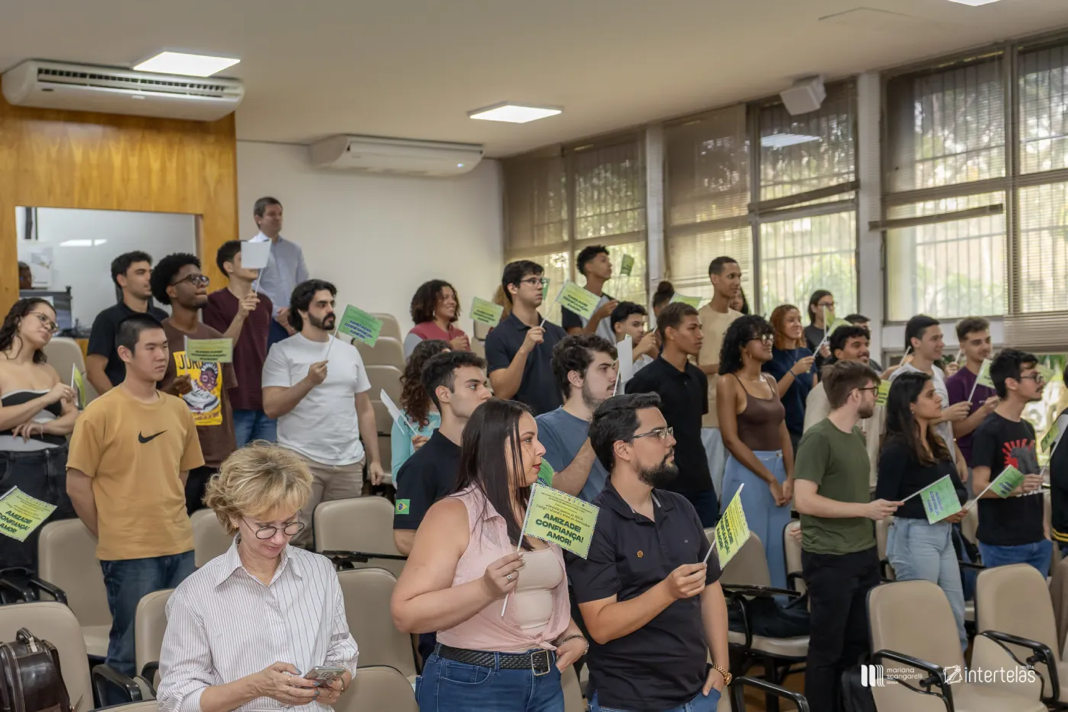
Photo: Mariana Scangarelli / Revista Intertelas.
The program also featured the “Anthem of the Peoples of BRICS” in Portuguese. During the Russian stage, students from eight countries, including Brazil, created this anthem, whose lyrics express hope and friendship. At the event in Rio, a video featuring students of the Moscow State Institute of International Relations (MGIMO University of the Russian Ministry of Foreign Affairs) was shown while the anthem was performed. The lyrics appeared on a large screen so that those present could sing along, waving program flags bearing the words “friendship”, “trust” and “love”. According to Sekacheva, “this anthem is a symbol of our friendship”.
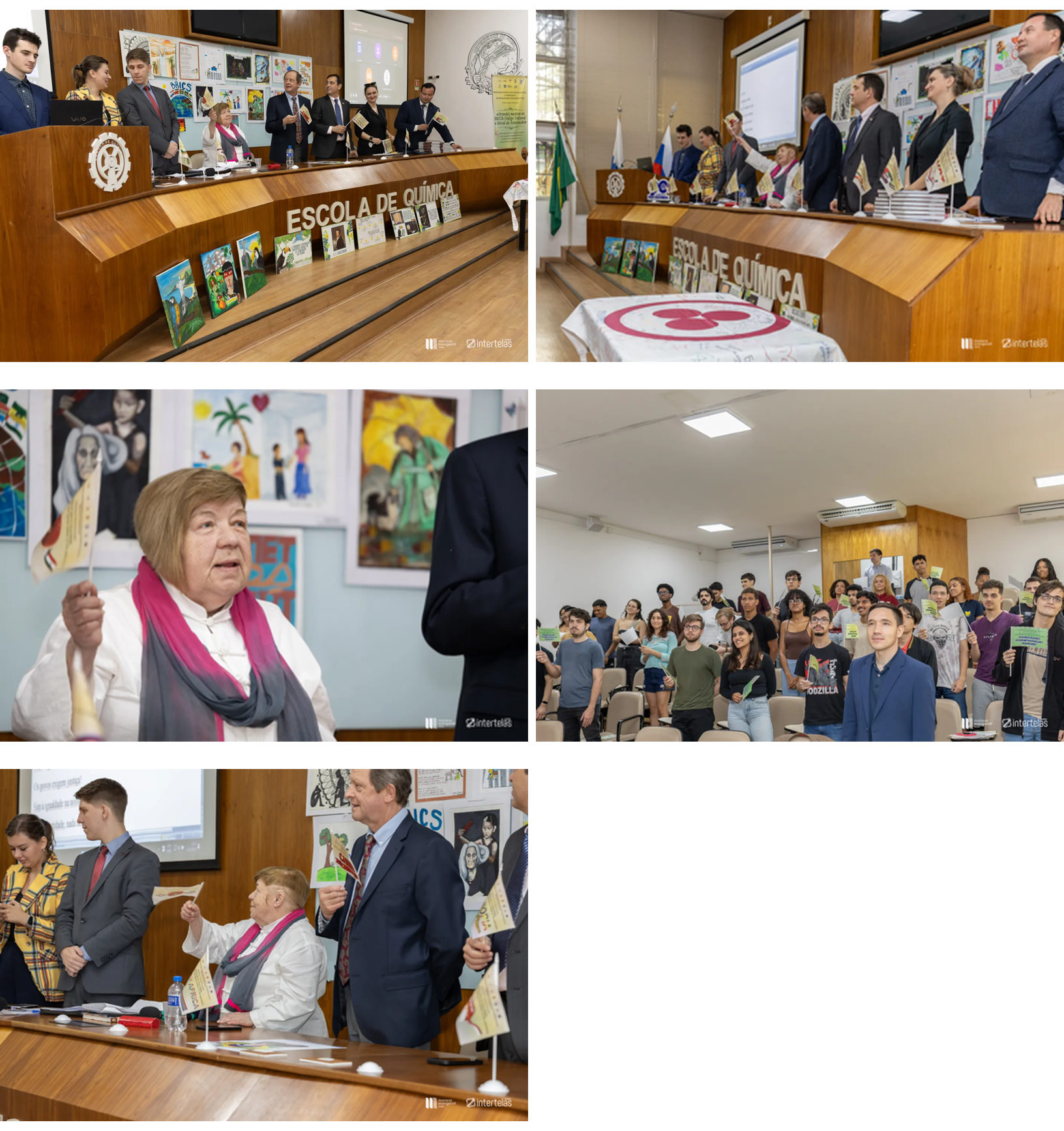
Photo: Mariana Scangarelli / Revista Intertelas.
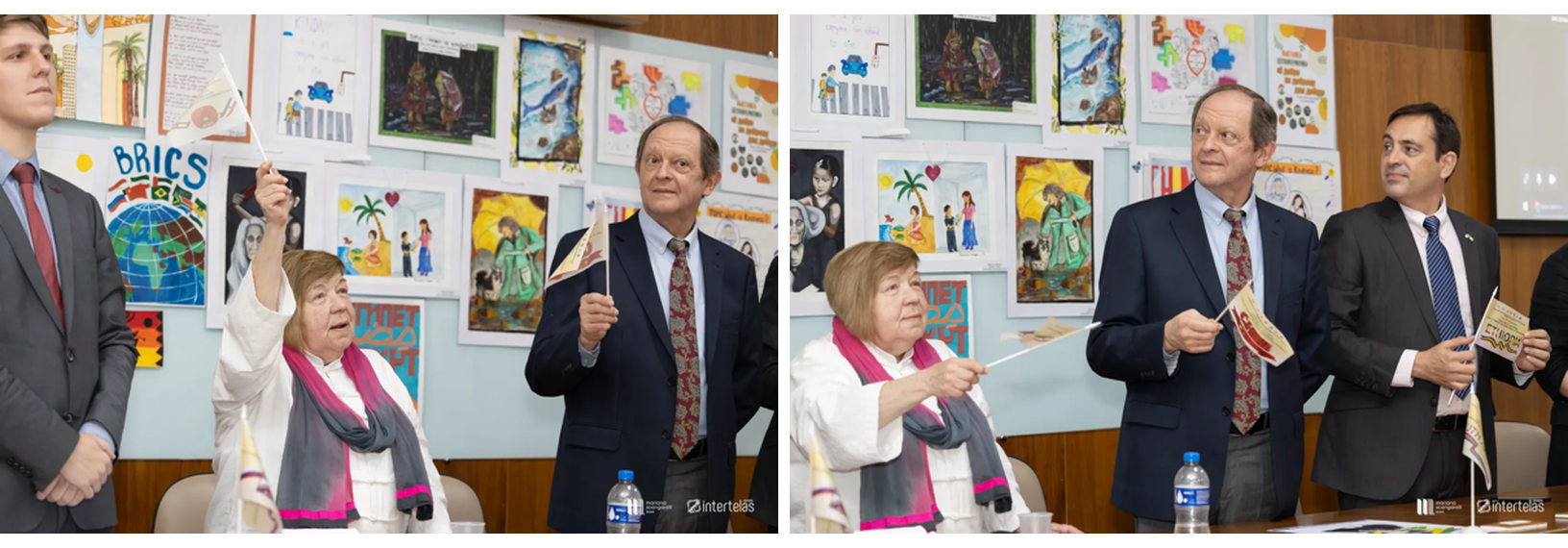
Photo: Mariana Scangarelli / Revista Intertelas.
In the same spirit, Sergey A. Ryabkov, Deputy Minister of Foreign Affairs of the Russian Federation and Russia’s BRICS Sherpa, emphasized that each BRICS country is unique and has its own civilizational, cultural and historical identity. “Our strength lies in this diversity, which opens up horizons for cooperation that expands the economic, social, innovative and human potential of our countries. One of the main areas of the BRICS strategic partnership is the development of humanitarian ties, as reflected in the leaders’ declaration of the association’s 17th summit. People-to-people contacts build trust among different civilizations, religions and macroregions, creating opportunities for shared growth.”
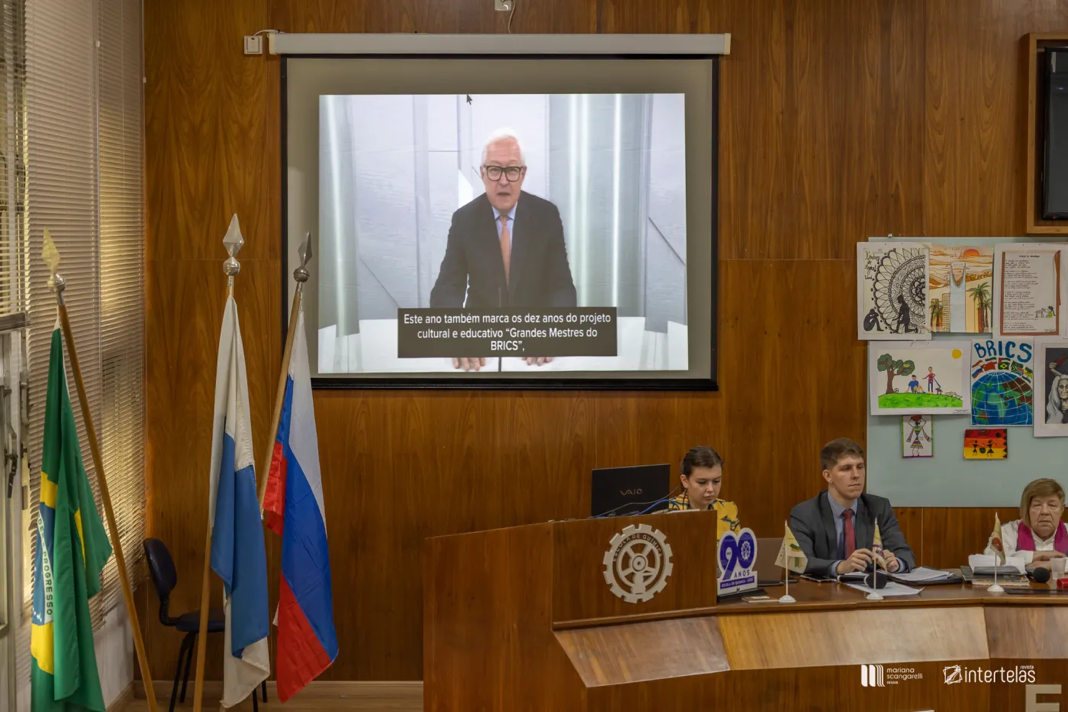
Sergey A. Ryabkov, Deputy Minister of Foreign Affairs of the Russian Federation and Russia’s BRICS Sherpa. Photo: Mariana Scangarelli / Revista Intertelas.
Vinay Kumar, India’s Ambassador to the Russian Federation, believes that “the initiative launched in New Delhi, Mumbai and Pune in 2022 has, over time, contributed to one of BRICS’ most significant achievements: creating a shared space of humanistic values through cooperation between public organizations and the academic community. The organization’s flagship project, ‘Great Teachers of BRICS: The Association’s Cultural and Moral Code’, is of particular importance to India. The teachings of the father of the Indian nation, Mahatma Gandhi, on steadfastness in truth (satyagraha) and non-violence (ahimsa), and their practical application, laid solid foundations for modern India and can serve as a moral compass for all humanity.”
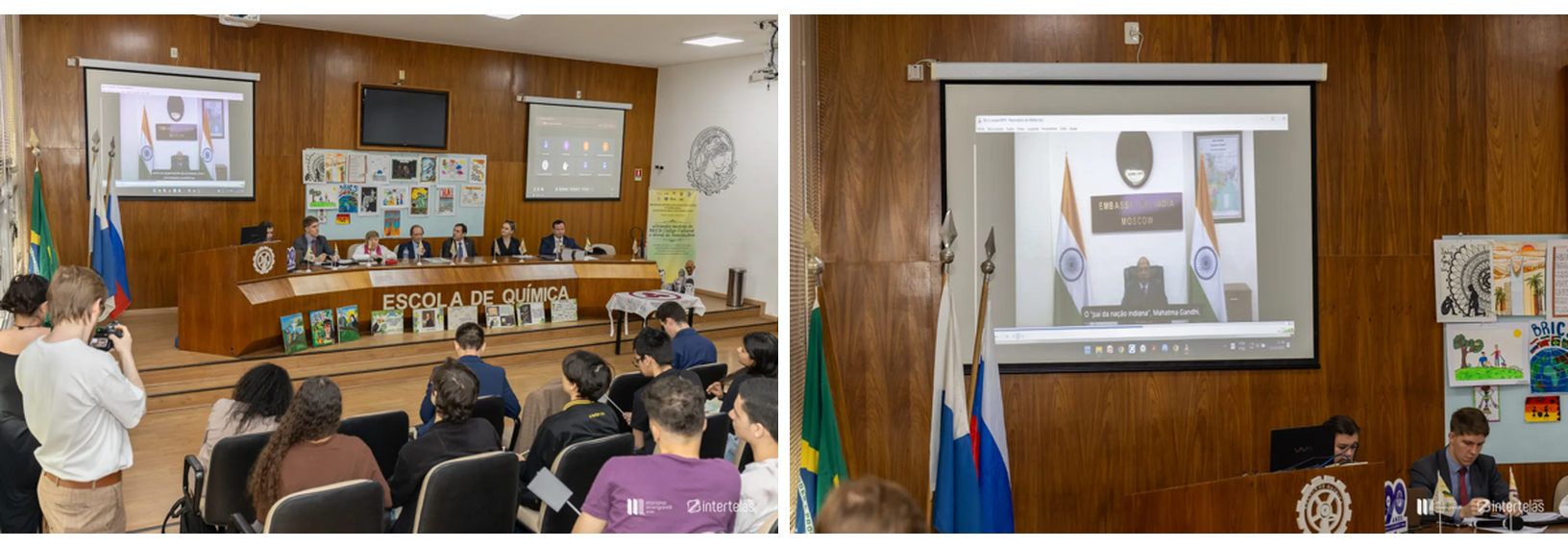
Photo: Mariana Scangarelli / Revista Intertelas.
Dmitry V. Polikanov, Deputy Head of Rossotrudnichestvo responsible for public diplomacy and youth policy, highlighted the importance of the agreements signed between schools, universities and colleges during the Brazilian stage for the development of new projects and business negotiations. “Taken together, these initiatives show that ties within BRICS are developing very actively and that a new system of global governance is indeed emerging, built on a solid foundation of interaction among people, civil society representatives, business leaders and universities, and of cultural exchange. This solid foundation sets the course for the future and demonstrates the association’s success.”
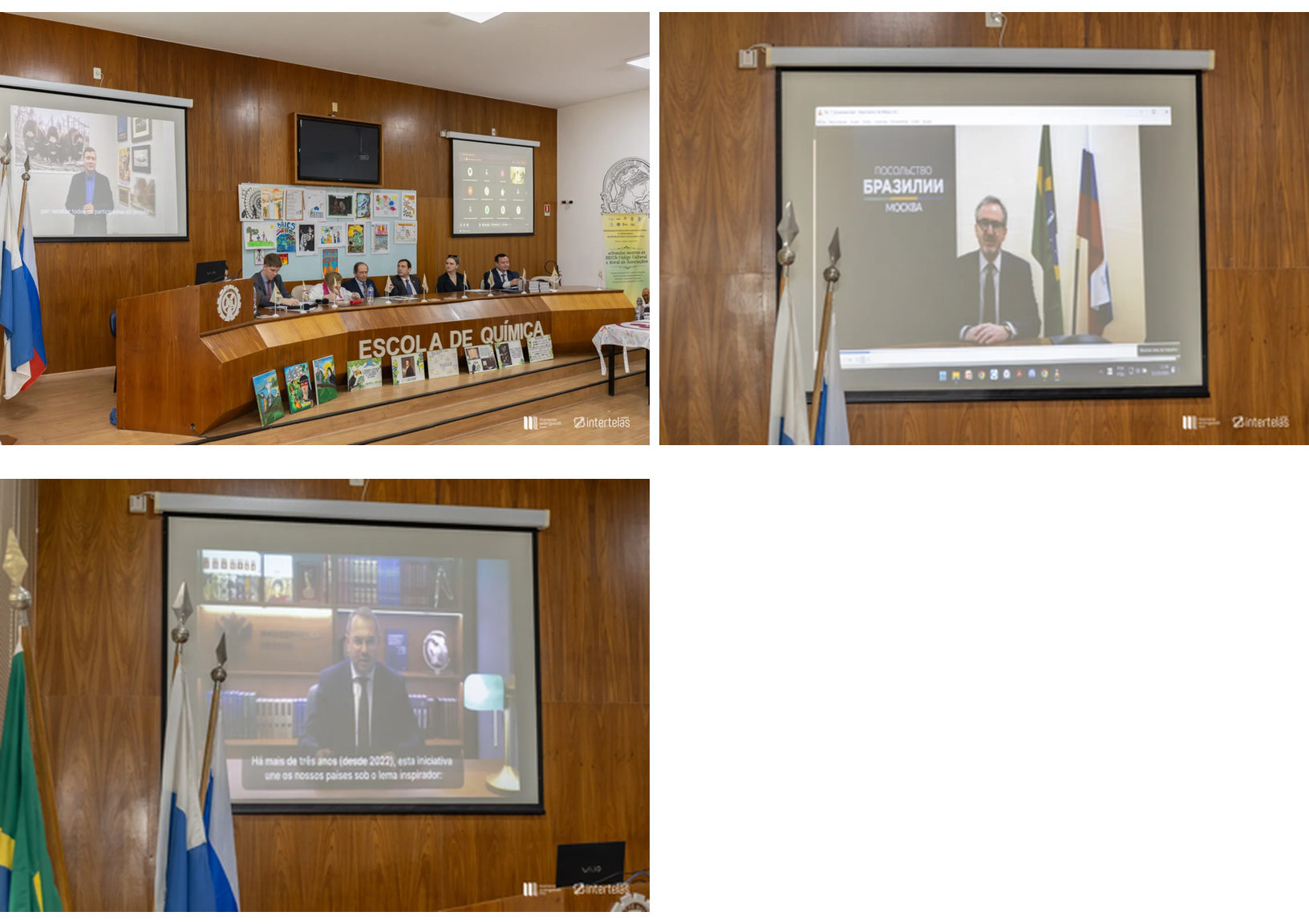
Photo: Mariana Scangarelli / Revista Intertelas.
Konstantin I. Mogilevsky, Deputy Minister of Science and Higher Education of the Russian Federation, who visited Rio de Janeiro in June to attend the BRICS+ University Rectors Forum and was hosted by its organizer, UFRJ, said: “Today, ‘The Peoples of BRICS Choose Life’ program is successfully implementing projects for the spiritual and moral education of children and young people, based on respect for history and loyalty to the traditions and cultures of the BRICS peoples. Its various activities create conditions for the development of the academic environment and cooperation among the business communities of the BRICS countries.”
BRICS Supports Building a More Equitable International System
According to Andrey Petrov, Russia’s Consul General in Rio de Janeiro, relations among BRICS members differ from traditional forms of international interaction. “As the legacy of the Baron of Rio Branco shows, international law cannot grant privileges to one country at the expense of another. President Putin also shares this view. He once said that the security of any one country cannot be ensured at the expense of other states. In other words, security must be shared by all. This logic underpins BRICS. In the same way, we must strive for an international reality in which every member of the global community has equal rights and a voice, and no country dominates the others.”
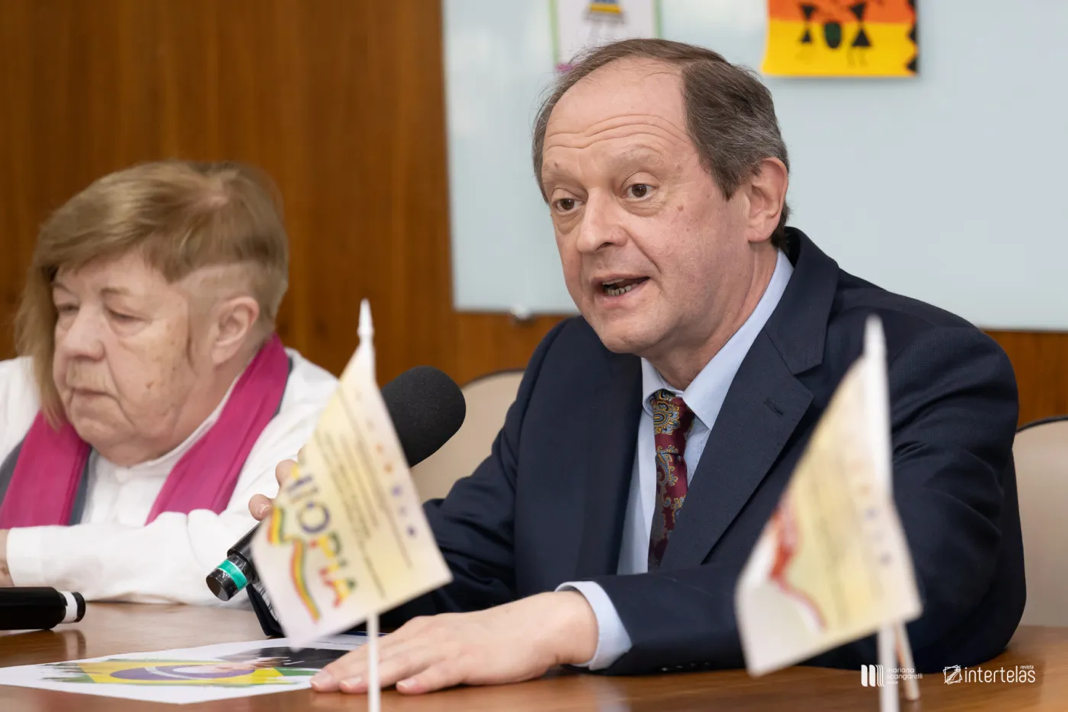
Russia’s Consul General in Rio de Janeiro, Andrey Petrov. Photo: Mariana Scangarelli / Revista Intertelas.
Photo: Mariana Scangarelli / Revista Intertelas.
In an interview with Intertelas, the diplomat said that strengthening exchanges among the BRICS countries, particularly in culture and ways of life, helps develop a shared framework for interaction. “There is great diversity among the countries of the association, but we need to find common ground in order to understand one another. The work of this organization also underscores the importance of each BRICS member’s role on the international stage.”
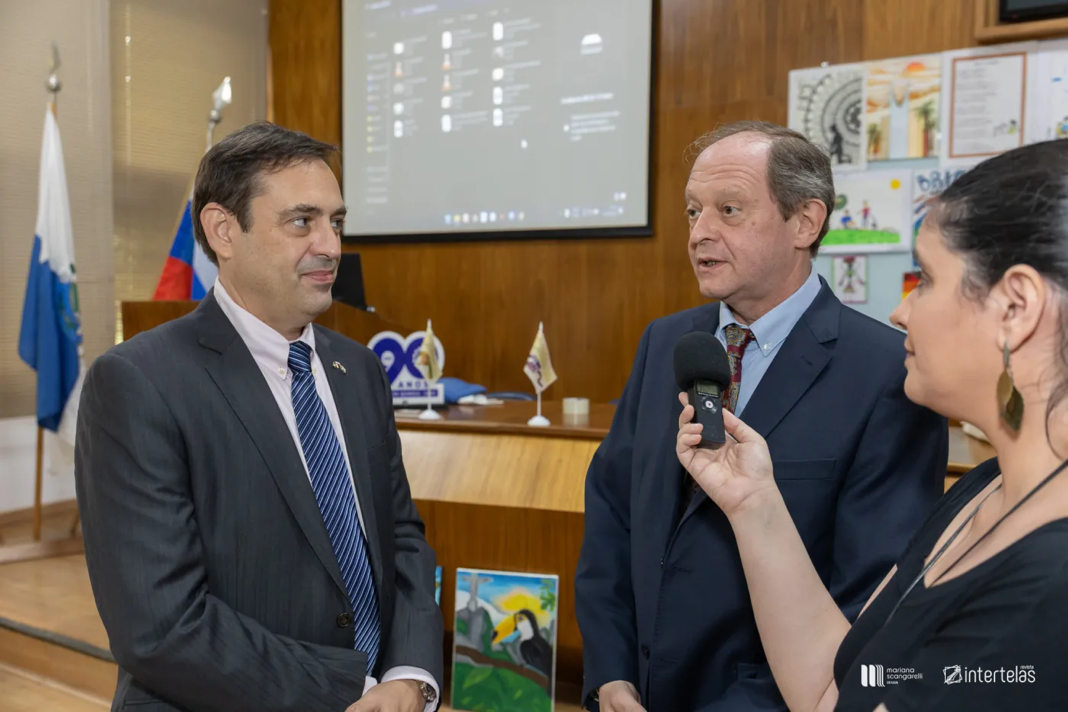
Photo: Mariana Scangarelli / Revista Intertelas.
Turning to Russian–Brazilian relations, the consul noted that there is considerable room for improvement, particularly in the two countries’ efforts to expand technological cooperation. “We should not simply sell technologies to each other, but exchange them and develop them together. I think this is a distinctive feature of our relationship. Brazil and Russia are also large countries with vast territories and abundant natural resources. Our peoples have much in common in their outlook: we cannot think only in narrow terms, but must take a broader view. Our traditions also share similarities. Of course, we each have our own distinctive features, but even these reveal interesting parallels. Both countries bring together different cultural worlds within a single state.”
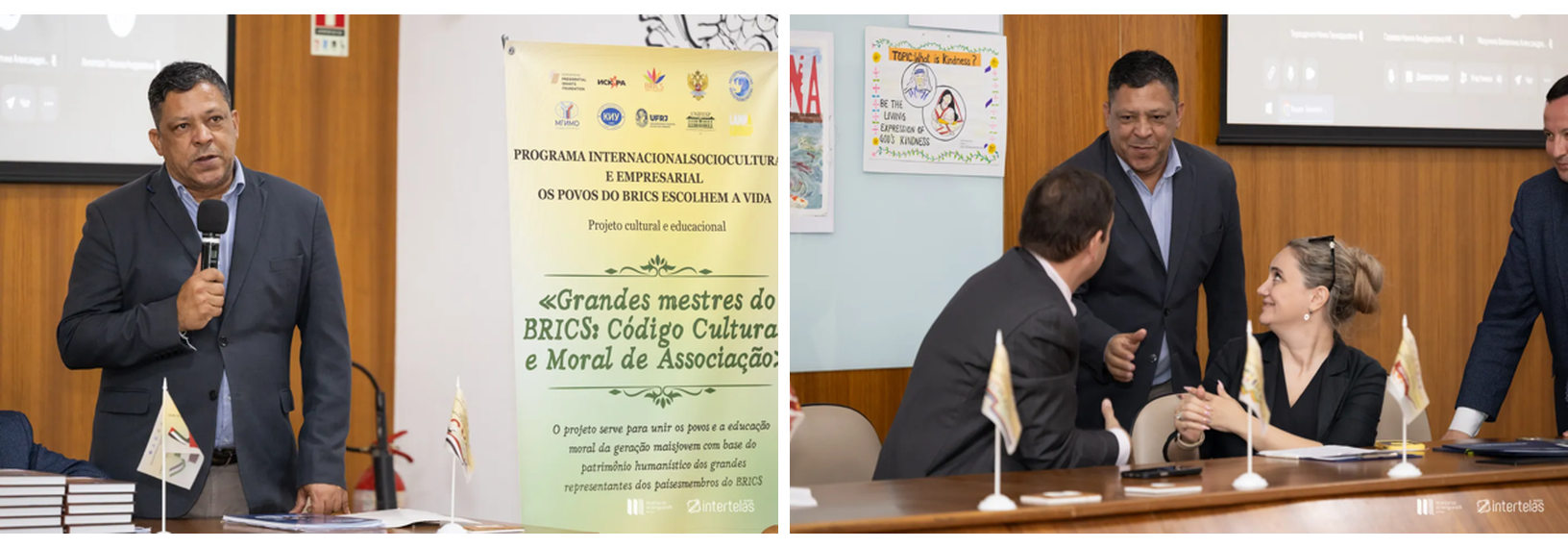
Photo: Mariana Scangarelli / Revista Intertelas.
Adilson Araujo, president of the Central Union of Workers of Brazil, who was invited to the event following a conversation with the president of “BRICS. World of Traditions” during the Eighth World Public Assembly in Moscow, spoke of the need to discuss the crisis of global capitalism and the problems faced by workers worldwide. “We need a deeper and better understanding of the world in which we live. As the leaders of the BRICS countries, such as Xi Jinping in China, make clear, the world must strive for shared progress while respecting peoples’ right to self-determination. Brazil can help bring about a new modernity that will make it possible to establish a new order. The world demands sustainable development founded on solidarity.”
In an interview with Intertelas, Fabio Krichtine, the Federal University of Rio de Janeiro’s special coordinator for international relations with the Russian Federation, noted that globalization has placed the cultures of certain countries in a dominant position. “A different dynamic operates within BRICS, however. It is a space where all cultures and cultural diversity are respected. When we speak of Russia, we are talking about an exceptionally rich culture. And Brazil and Russia, countries with great cultural diversity, must celebrate the friendship between their peoples to counter the ideas and images disseminated by major Western media outlets about the countries of the BRICS association. Its structure is polycentric, with several regional centers of power, making the system much more resilient.”
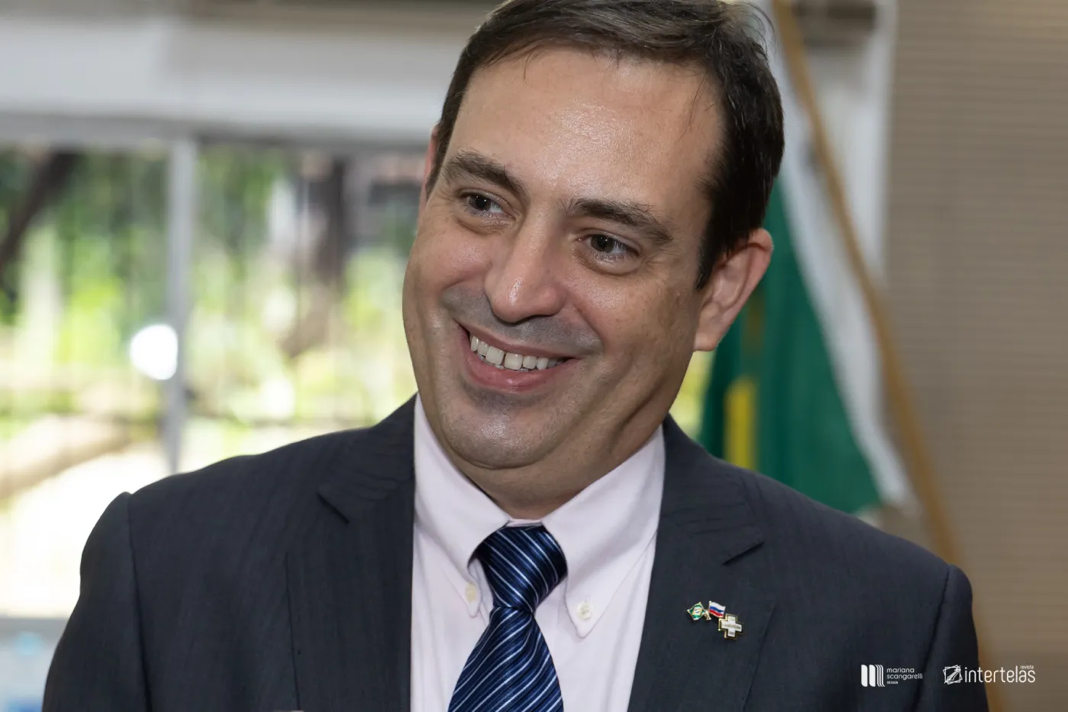
Fabio Krichtine, UFRJ’s special coordinator for international relations with the Russian Federation. Photo: Mariana Scangarelli / Revista Intertelas.
Photo: Mariana Scangarelli / Revista Intertelas.
In the academic’s view, Brazil needs to understand that Russia is more than Moscow, while Russia needs to recognize that Brazil extends beyond Rio de Janeiro. “Our academic exchanges have grown substantially. Today, we even have partnerships with institutions in Vladivostok. Last year, Lomonosov Moscow State University hosted the BRICS Rectors’ Forum and a forum of rectors from Russia, Belarus and Brazil. This year, UFRJ was the host. We already have around 11 or 12 agreements, and today we will sign another one, with Kazan Innovative University (KIU). Last year, representatives of 40 Brazilian universities visited Moscow. Today, states such as Bahia and Minas Gerais are holding their own events, and all these initiatives receive support from the federal government. This is a national strategy, rather than merely the policy of a particular administration, aimed at developing cooperation among the BRICS countries.”
Developing Academic and Cultural Ties between Brazil and Russia
The second half of the event featured the signing of a memorandum of understanding on academic and professional cooperation between UFRJ and Kazan Innovative University. Plans were also announced to sign a future memorandum among “BRICS. World of Traditions”, the ISKRA organization and UFRJ. In addition, the organization’s president, Sekacheva, presented Fabio Krichtine with Indian tea and a special edition of a biography of the Baron of Rio Branco—a book she had received five years earlier, in 2019, at the Itamaraty Palace. The special edition will be available in UFRJ’s international relations library. Representatives of Kazan Innovative University joined the event online.
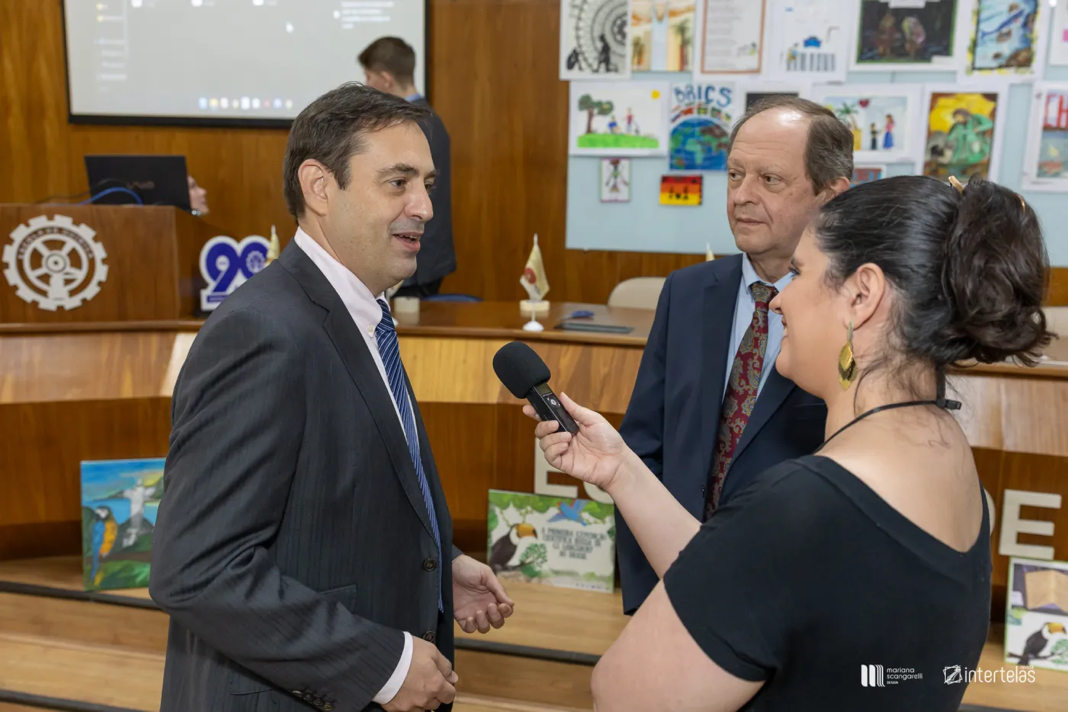
Photo: Mariana Scangarelli / Revista Intertelas.
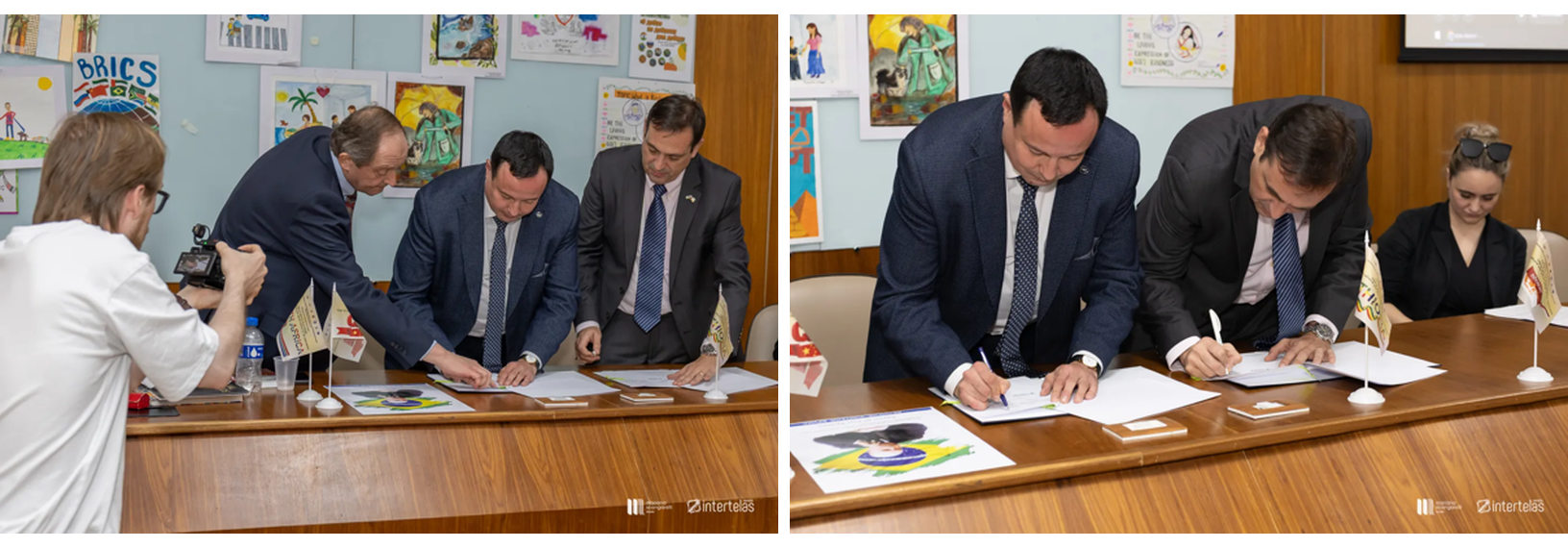
Photo: Mariana Scangarelli / Revista Intertelas.
According to KIU’s First Vice-Rector, Igor I. Bikeev, Kazan—the capital and largest city of the Republic of Tatarstan, where Russia hosted the BRICS Summit in 2024 and where the Russian stage of the program took place—has a history spanning more than a thousand years and is one of the country’s most important centers of education and science. “Education and science transform people by expanding their intellectual capacities, enabling them to understand more complex processes and make more considered decisions. They can unite people in the fight against ignorance, poverty and cruelty. Last year, our university opened a classroom dedicated to BRICS, presenting the history of the association. It showcases the values that unite us: equality, solidarity, trust, justice, prosperity, honesty, humanity and reciprocity. By preserving these values, the BRICS countries can change the world for the better.”
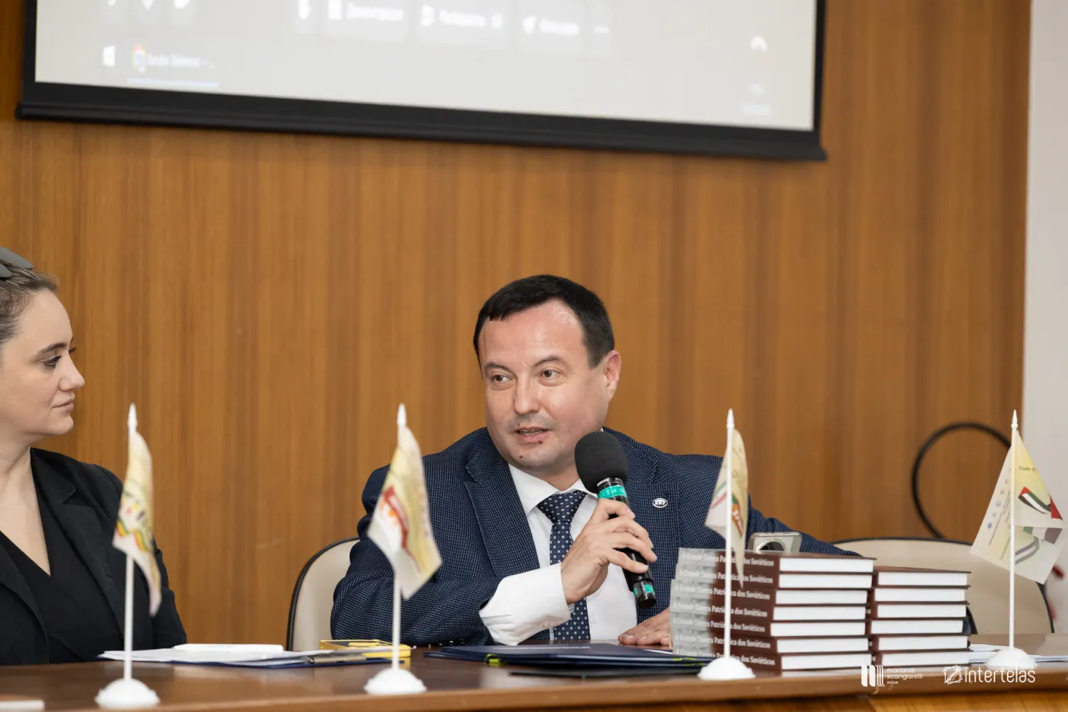
Igor I. Bikeev, First Vice-Rector of Kazan Innovative University (KIU). Photo: Mariana Scangarelli / Revista Intertelas.
After Bikeev’s address, the audience was invited to the premiere of the documentary “Great Teachers of BRICS: The Association’s Cultural and Moral Code”. The film was made in collaboration with students from MGIMO and Kazan Innovative University, with support from film industry professionals. According to Darya E. Zinkovskaya, the project’s coordinator in Brazil and director of the ISKRA organization, cultural productions, such as the magnificent Brazilian television series “The Slave Isaura”, have made Brazil feel close to some Russians. “In fact, thanks to this series, the word ‘fazenda’ entered the Russian language, meaning a country house. And some girls born while the series was being shown in Russia in 1980 were named Isaura. This shows that Brazilian culture entered our lives quite a long time ago, and that is deeply symbolic,” Zinkovskaya concluded.
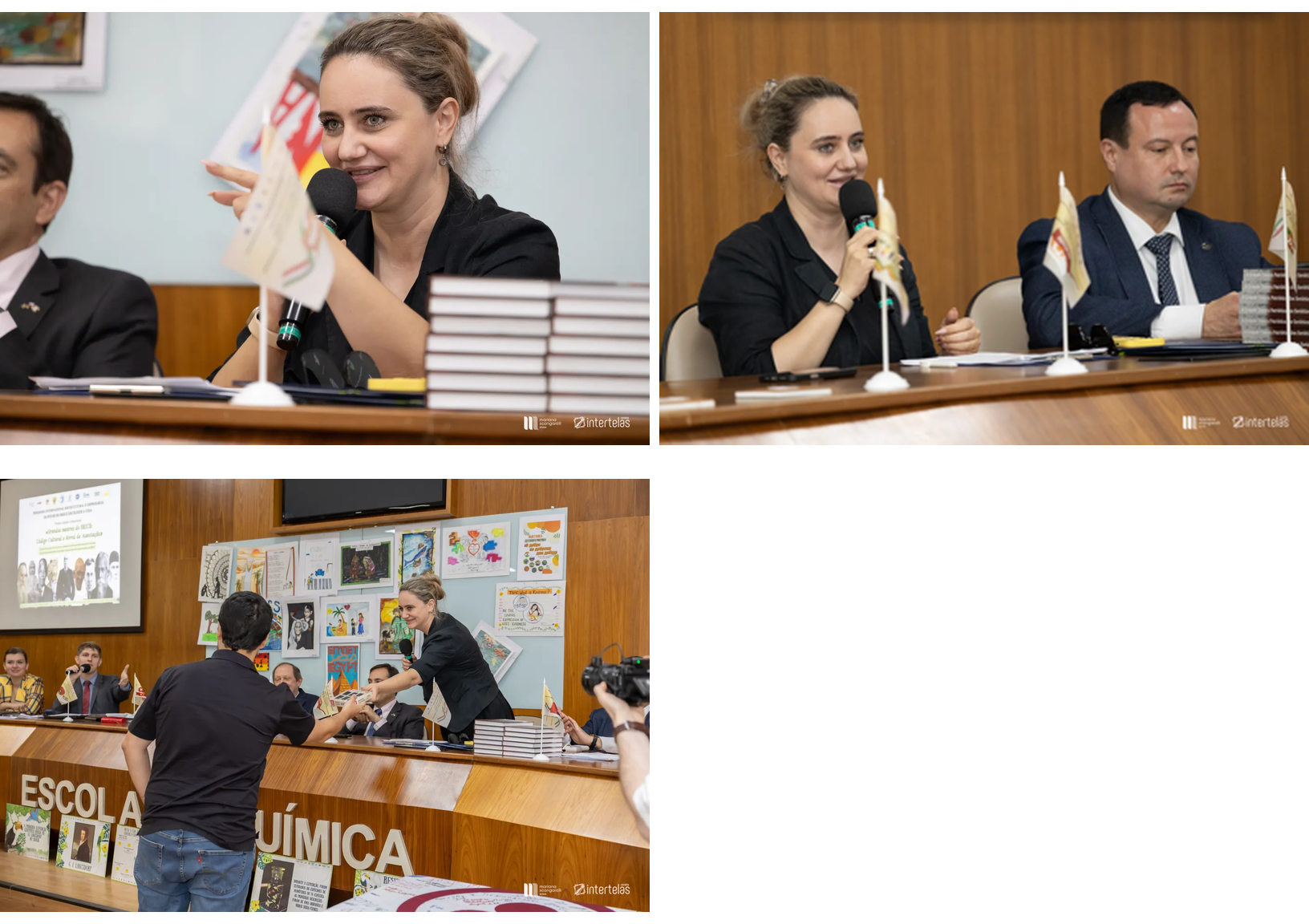
Photo: Mariana Scangarelli / Revista Intertelas.
The BRICS Countries’ Participation in the Second World War
Finally, the Brazilian collection of research articles “The Great Patriotic War of the Soviet People”, published in Brazil by Multifoco and in Russia in Portuguese, English and Russian with the involvement of Kazan Innovative University, became part of the literary and historical project “Voice of Truth”. The initiative commemorates the 80th anniversary of the Victory over fascism and the solidarity of the peoples of BRICS in fighting a common enemy. “Yesterday, we visited the monument to those who died in the Second World War in Rio and laid flowers in their memory. It is important to us to preserve the memory of this historical period. Unfortunately, there are many distortions of history in the world today, and our mission is to preserve the truth,” Sekacheva explained.
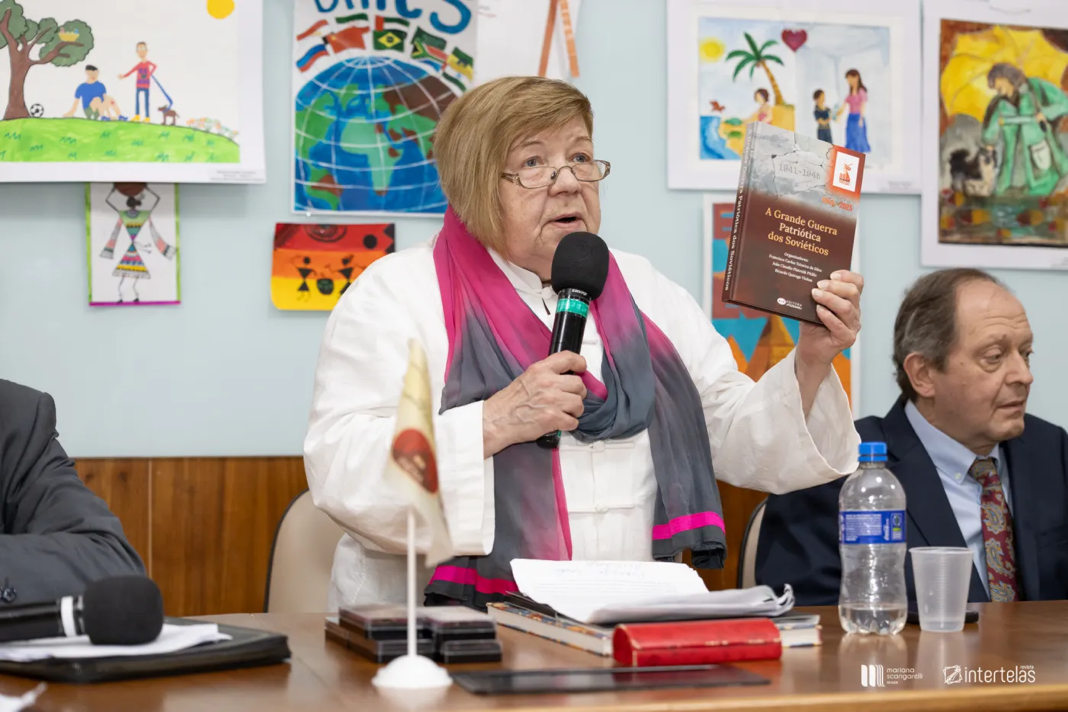
Photo: Mariana Scangarelli / Revista Intertelas.
Her address was followed by a screening of the TV BRICS report “Writers and Journalists from BRICS Countries Discuss the Second World War in Their Books”. The report featured works by researchers from different BRICS countries seeking to restore the memory of those countries’ participation and contribution to the Second World War—a subject still little known to the wider global public. Those present then observed a minute of silence in honor of the heroes of the Second World War, and the authors were presented with medals and copies of the editions published in Kazan.
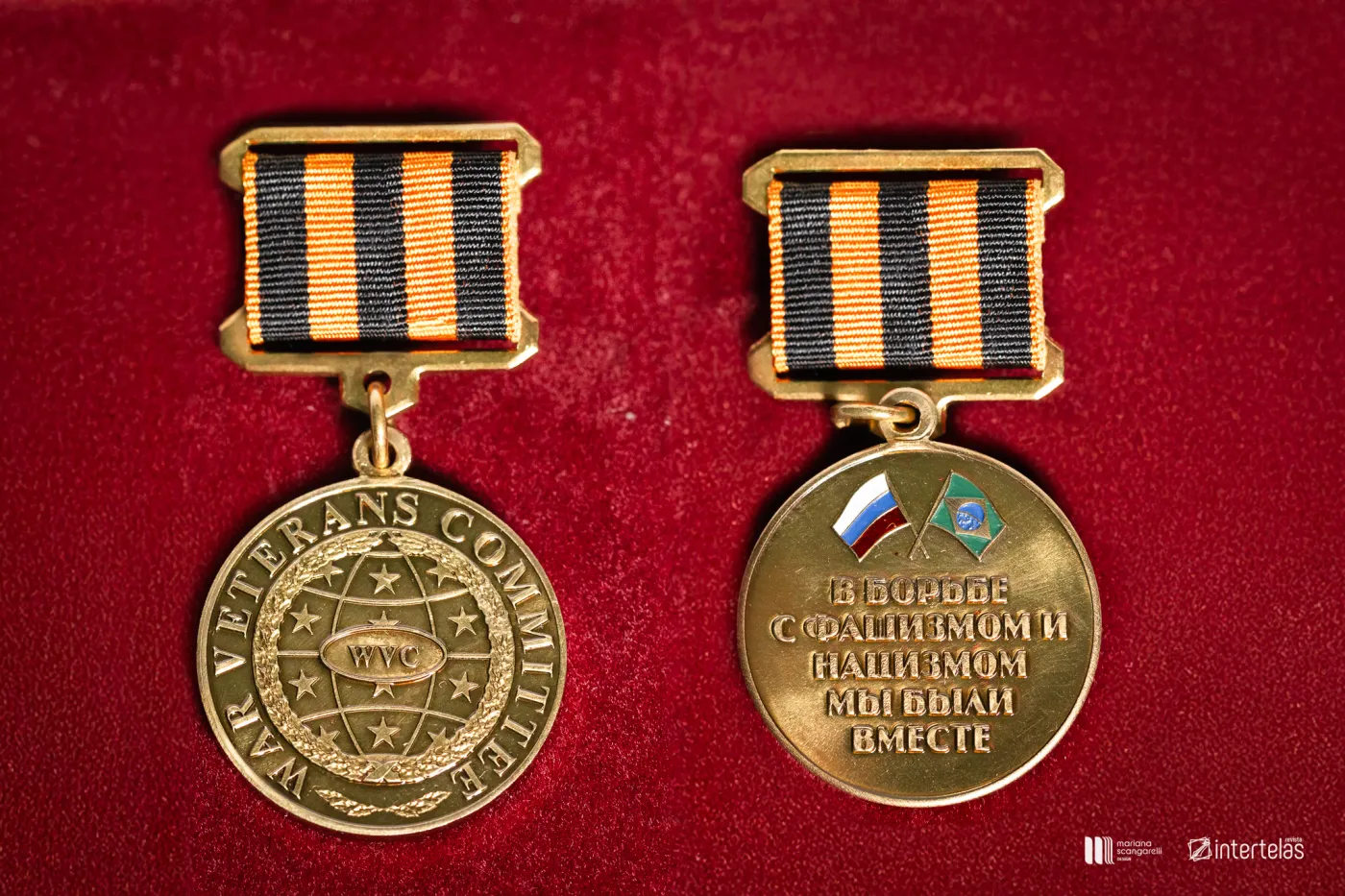
Photo: Mariana Scangarelli / Revista Intertelas.
“This medal was created five years ago. It has two images. One shows the flags of Brazil and Russia and the words: ‘We stood together in the fight against fascism and Nazism.’ The medal was also instituted with the support of an international organization of veterans of that war, which naturally includes Russian and Brazilian veterans,” Sekacheva explained. She said that copies of the book prepared in Kazan had been donated to the UFRJ library and would also be sent to educational institutions in other BRICS countries.
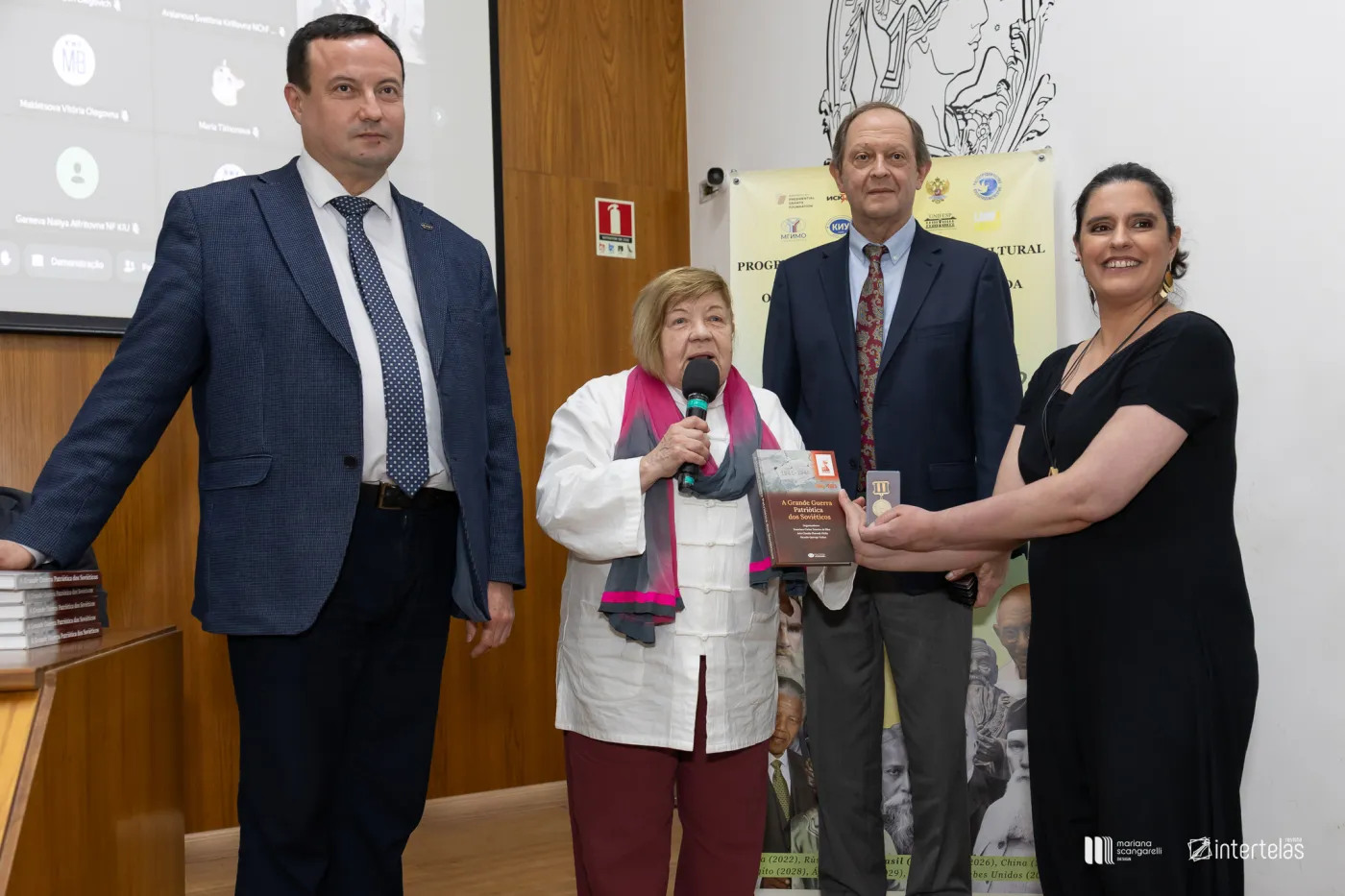
Alessandra Scangarelli Brites, journalist, specialist in international politics (PUCRS) and holder of a master’s degree in international strategic studies (UFRGS). Photo: Mariana Scangarelli / Revista Intertelas.
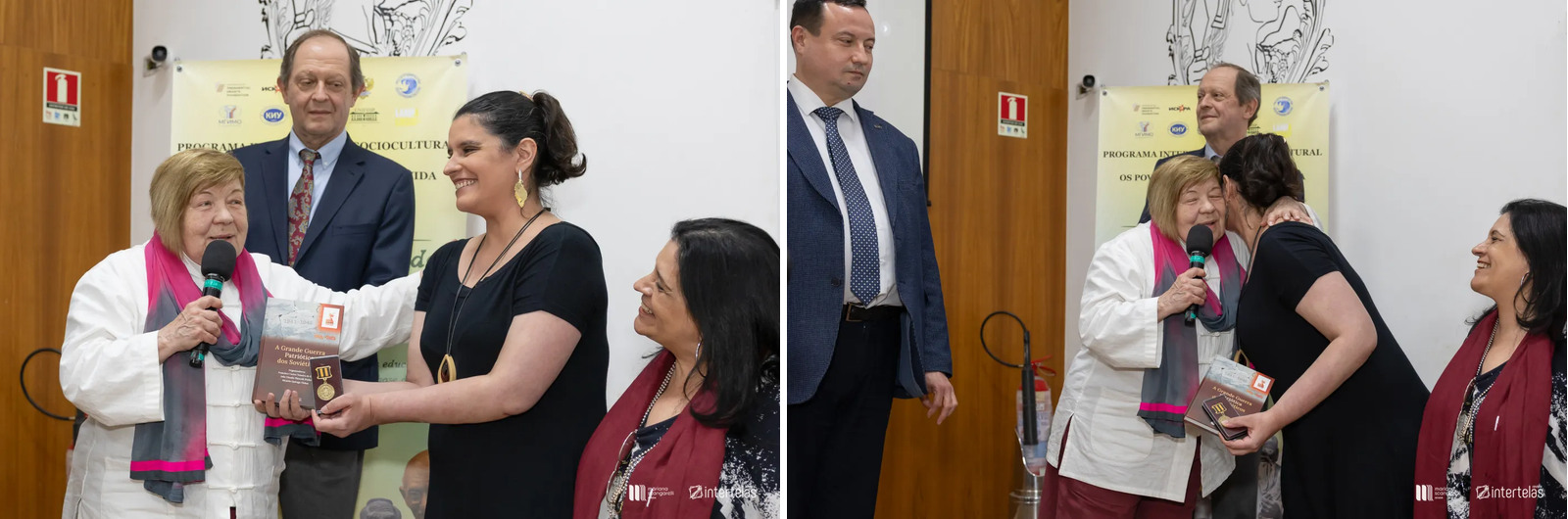
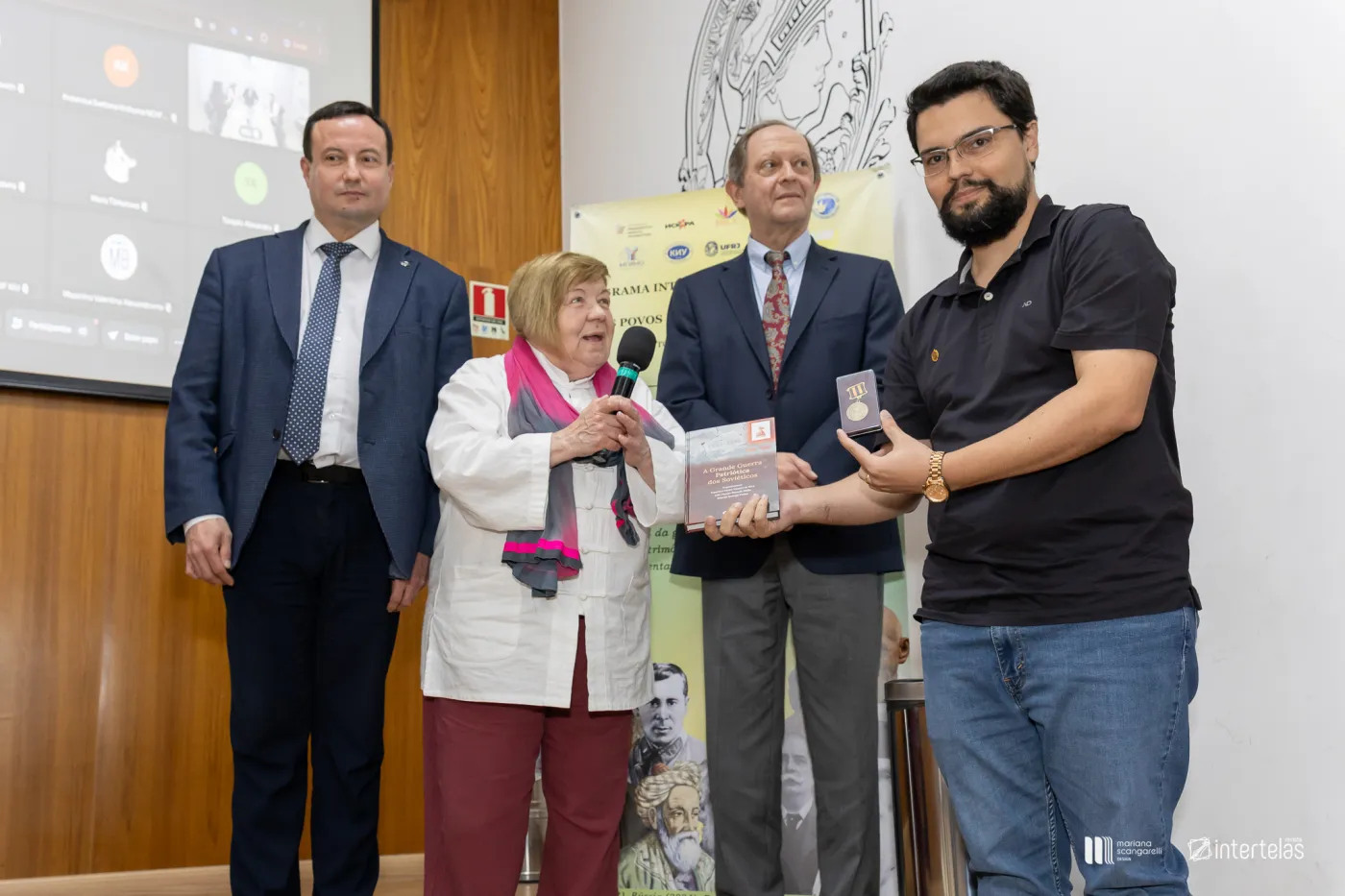
Vinicius da Silva Ramos, PhD in History, Rio de Janeiro State University (UERJ). Photo: Mariana Scangarelli / Revista Intertelas.
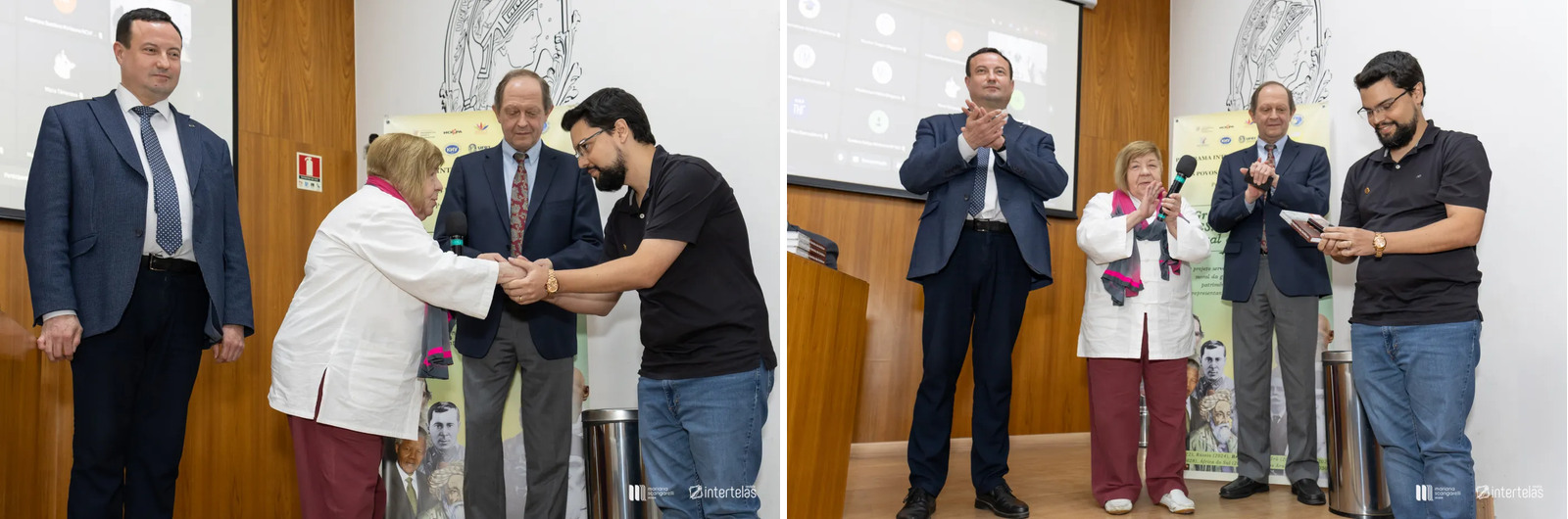
The team that conceived and wrote “The Great Patriotic War of the Soviet People” consists of ten authors. Present at the event to receive awards and represent the group were Alessandra Scangarelli Brites (journalist, specialist in international politics at PUCRS and holder of a master’s degree in international strategic studies from UFRGS), Marina Magalhaes Barreto Leite da Silva (postdoctoral researcher in international relations at the University of the Free State in South Africa and PhD in International Public Policy from Osaka University, Japan), Ricardo Quiroga Vinas (law graduate and researcher of the Second World War) and Vinicius da Silva Ramos (PhD in History from UERJ).
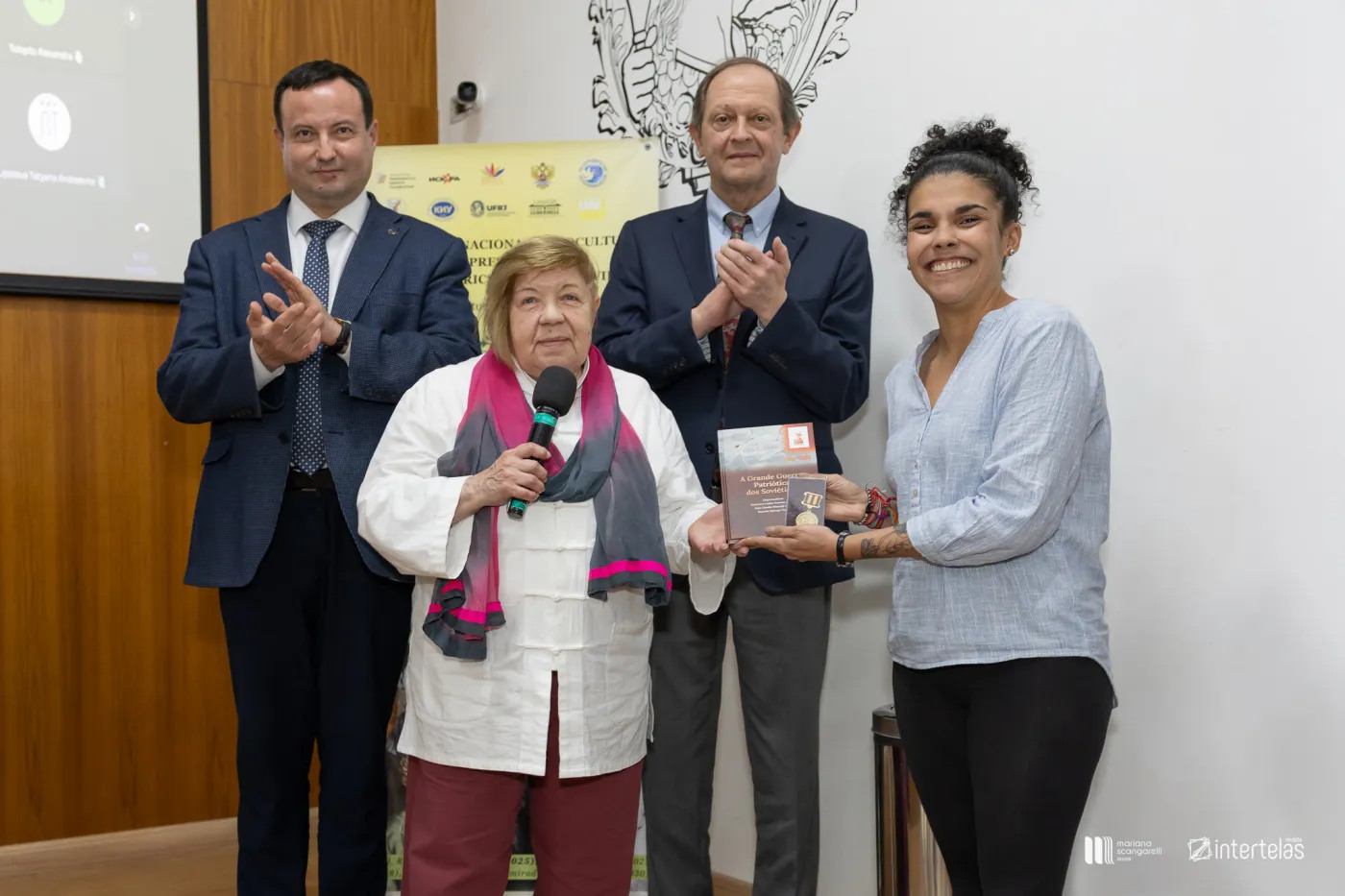
Marina Magalhaes Barreto Leite da Silva, postdoctoral researcher in international relations at the University of the Free State (South Africa) and PhD in International Public Policy from Osaka University (Japan). Photo: Mariana Scangarelli / Revista Intertelas.
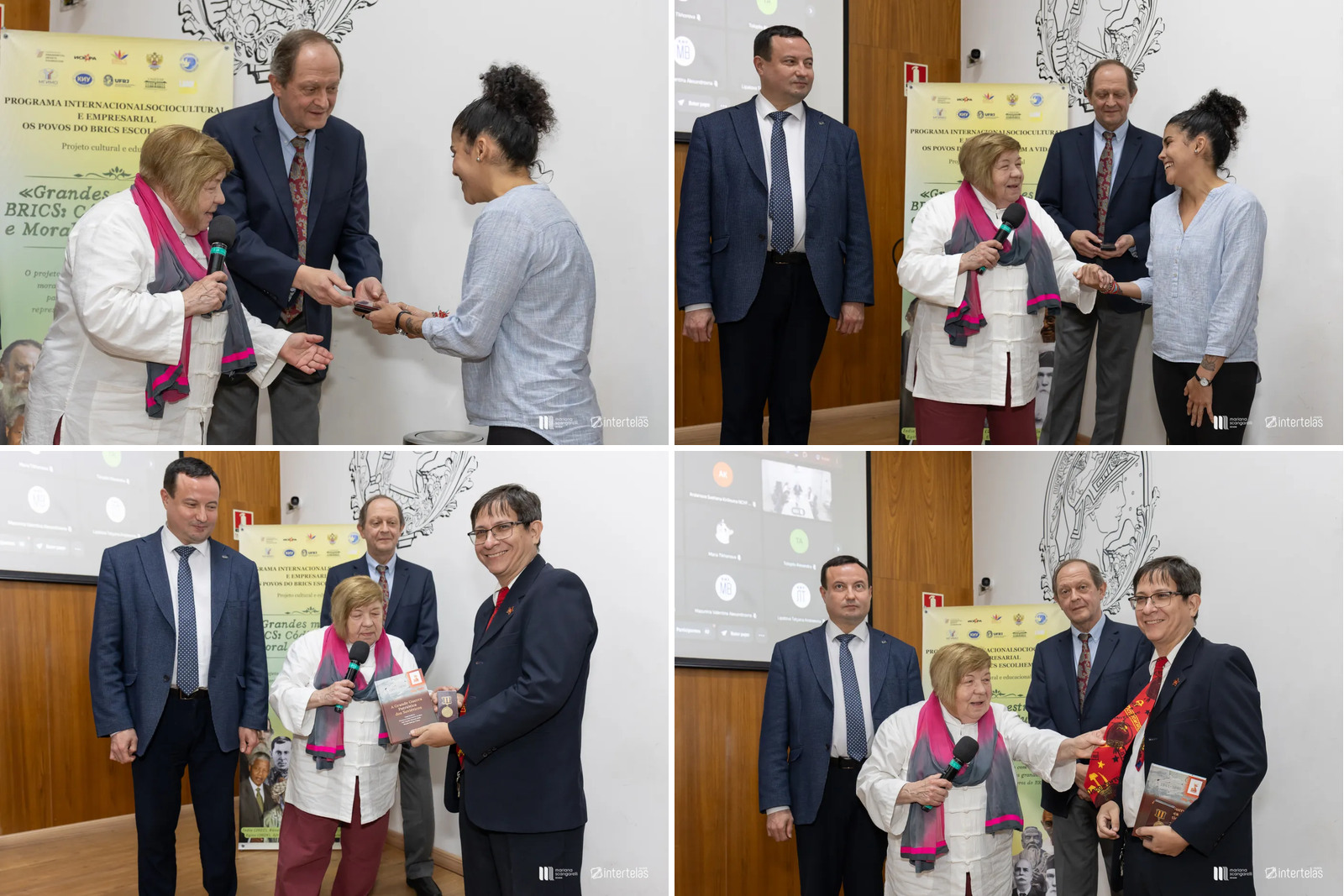
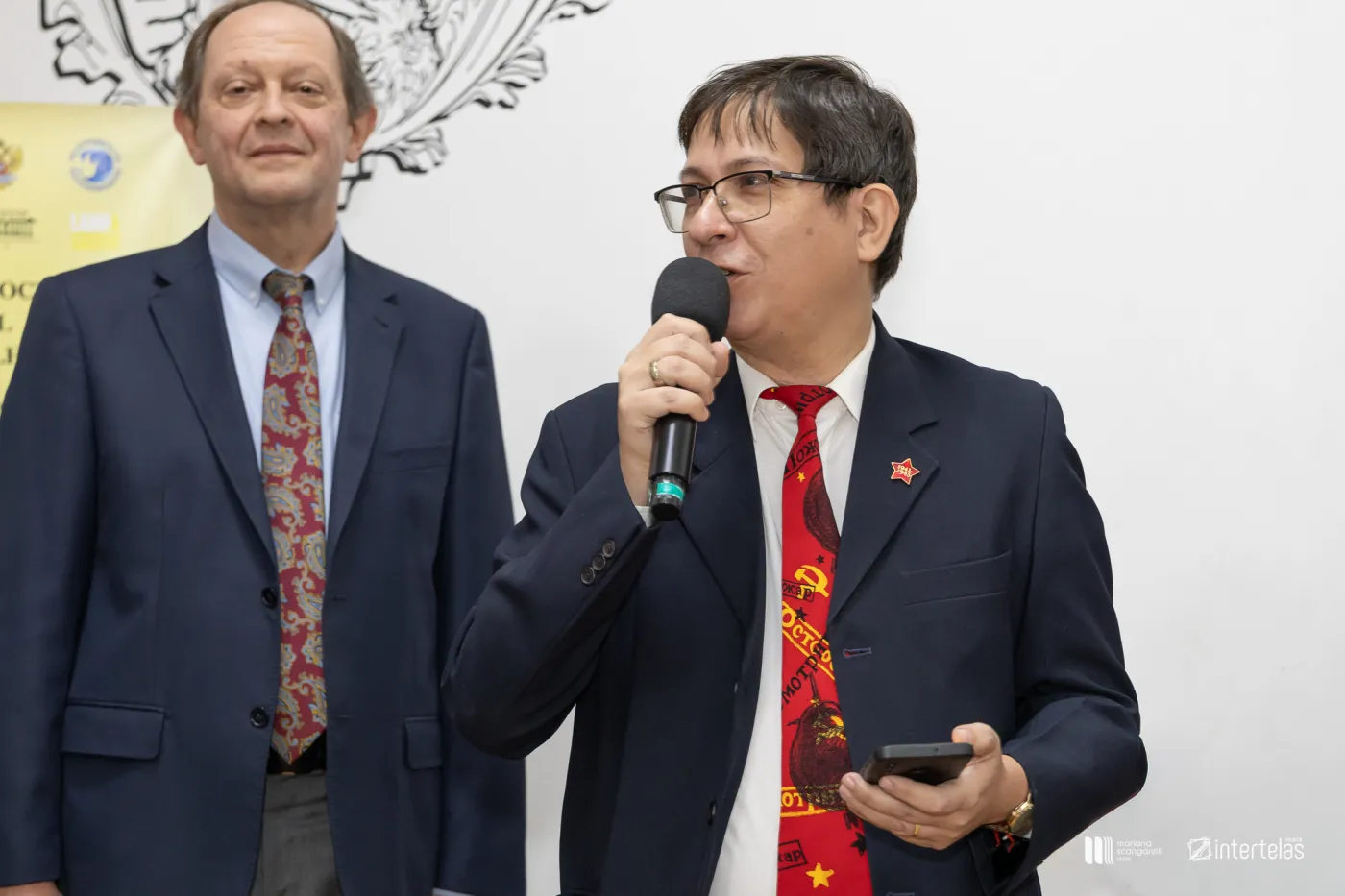
Ricardo Quiroga Vinas, law graduate and researcher of the Second World War. Photo: Mariana Scangarelli / Revista Intertelas.
Speaking on behalf of his colleagues, Ricardo Quiroga Vinas, one of the principal initiators of the book, said that studying this historical period holds personal significance for him. “I was born in Prague, a city liberated by the Soviet Army on 9 May 1945. My father was born on 8 May 1945. I would like to express my gratitude for this award, presented by ‘BRICS. World of Traditions’. This book is the fruit of a collective effort to challenge historical revisionism and restore recognition of the Soviet Union’s historical role in defeating Nazism. It is always important for new generations to know the role that the founding countries of BRICS played in the Second World War in defending humanity.”
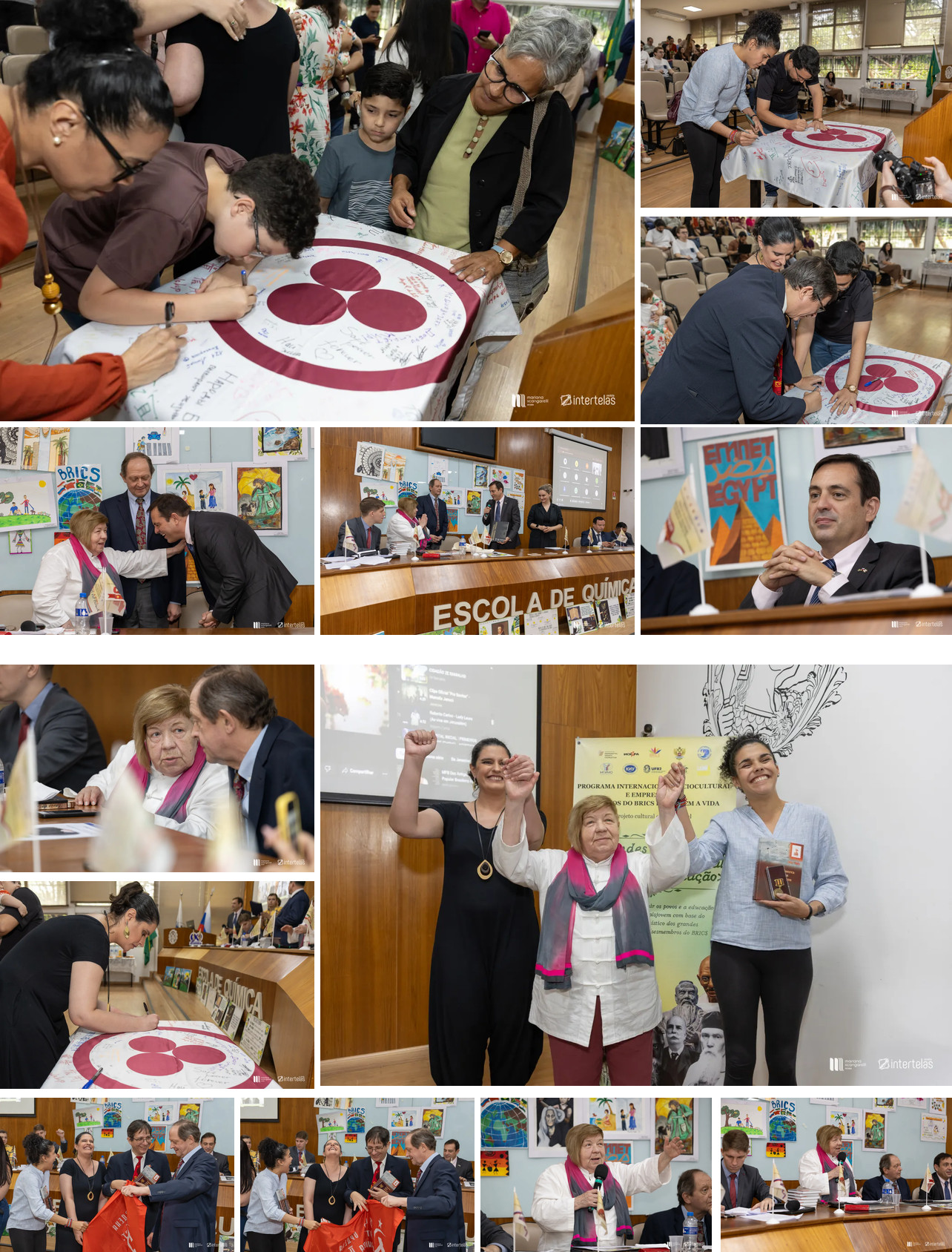
Photo: Mariana Scangarelli / Revista Intertelas.
Watch an excerpt from the program held in São Paulo in the video below.
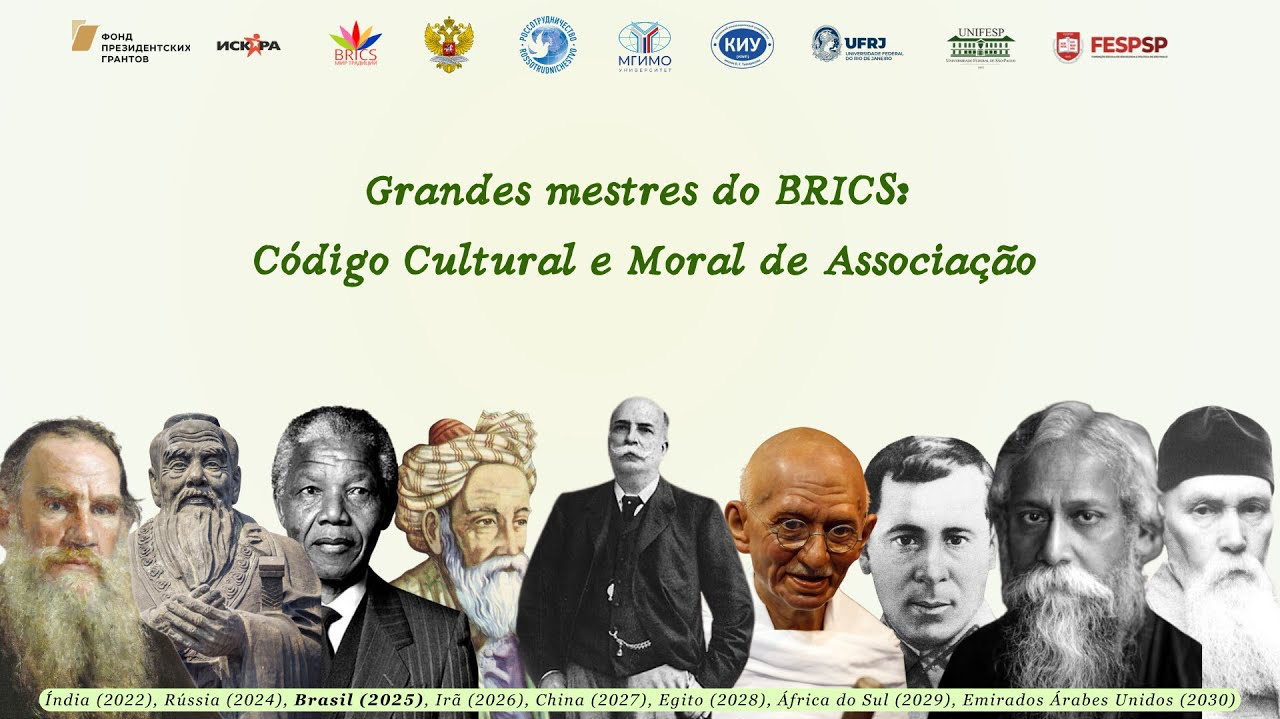
Video: “Great Teachers of BRICS”, FESPSP. Watch the video in the original publication
Author: Alessandra Scangarelli Brites—journalist and researcher, specialist in international politics (PUCRS), holder of a master’s degree in international strategic studies (UFRGS), and editor-in-chief of Revista Intertelas.
Published on 20 October 2025. Topics: Rossotrudnichestvo, “BRICS. World of Traditions”, Consulate General of Russia in Rio de Janeiro, Kazan Innovative University, UFRJ.
Original article: https://revistaintertelas.com/2025/10/20/programa-os-povos-do-brics-escolhem-a-vida-promove-o-intercambio-estrategico-entre-os-paises-do-grupo/
Comments